Epoxy Adhesives

1K & 2K Structural Adhesives

Epoxy Adhesives

High-Performance Structural Epoxy Adhesives

Engineered for load-bearing assemblies and extreme operating environments, epoxy adhesives are thermosetting polymers that form high-modulus, crosslinked networks upon curing. Unlike solvent-based adhesives that dry via evaporation, epoxies cure through a stoichiometric chemical reaction. This results in a 100% solid bond line with virtually zero shrinkage, offering exceptional tensile strength, chemical resistance, and dimensional stability.

Whether bonding dissimilar substrates like carbon fiber reinforced polymers (CFRP) to aluminum, or requiring a high glass transition temperature (Tg) for aerospace applications, industrial epoxy formulations deliver permanent, reliable mechanical fastening alternatives.

Looking for electronic protection? While epoxies excel as adhesives, low-viscosity formulations are also heavily used to protect circuitry. If your primary goal is dielectric insulation, thermal management, or protecting components from shock and moisture, view the dedicated Potting & Encapsulants category.

176 products

  • 3M™ Scotch-Weld™ 460

    3M™ Scotch-Weld™ DP460

    • High shear strength
    • 60-minute work life
    • Easy mixing
  • 3M™ Scotch-Weld™ DP410

    3M™ Scotch-Weld™ DP410

    • Fast-setting
    • Toughened formulation
    • Convenient 2:1 mix ratio
  • 3M Adhesive Mix Monitor

    3M Adhesive Mix Monitor

    • Real-Time In-Line Monitoring for Two-Part Adhesive Dispensing
    • Reduce Bond Failure Risk from Improperly Mixed Two-Part Adhesives
    • Minimize Adhesive Waste from Unnecessary Purging
  • 3M™ Scotch-Weld™ Epoxy Adhesive DP125

    3M™ Scotch-Weld™ Epoxy Adhesive DP125

    • 25-minute worklife
    • Flexible
    • High peel and shear strength
  • 3M™ Scotch-Weld™ Epoxy Adhesive 7240 FR

    3M™ Scotch-Weld™ Epoxy Adhesive 7240 FR

    • Long open time for large surface application
    • Non-sag properties
    • Contains glass beads for thickness control
  • 3M™ Scotch-Weld™ Epoxy Adhesive DP110

    3M™ Scotch-Weld™ Epoxy Adhesive DP110

    • Controlled flow
    • 20-minute handling strength
    • Good adhesion to many plastics and metals
  • 3M™ Scotch-Weld™ Epoxy Adhesive DP190

    3M™ Scotch-Weld™ Epoxy Adhesive DP190

    • 90-minute work life
    • 1:1 mix ratio
    • High shear and peel strength
  • 3M™ Scotch-Weld™ Epoxy Adhesive 7260FC NS

    3M™ Scotch-Weld™ Epoxy Adhesive 7260FC NS

    • Toughened formulation
    • Cures at room temperature or accelerated at up to 65 °C
    • Working time of 90 minutes
  • 3M™ Scotch-Weld™ Epoxy Adhesive 7288

    3M™ Scotch-Weld™ Epoxy Adhesive 7288

    • Two-part A/B epoxy system
    • High durability
    • Strong adhesion to metals and thermoset plastics
  • 3M™ Scotch-Weld™ Epoxy Adhesive DP760

    3M™ Scotch-Weld™ Epoxy Adhesive DP760

    • 2:1 mix ratio
    • Non sagging paste
    • High temperature resistance
  • 3M™ Static Mixing Nozzle

    3M™ Static Mixing Nozzle

    • Available for 50 mL and 200 mL / 400 mL cartridge formats
    • Doubles as a cartridge storage cap between uses
    • Automatic ratio metering through passive cascade mixing
  • 3M™ Scotch-Weld™ EPX Mixing Nozzle

    3M™ Scotch-Weld™ EPX Mixing Nozzle

    • Simultaneous metering, mixing, and application in one step
    • Used nozzle doubles as a cartridge storage seal between uses
    • Compatible with 3M EPX manual and pneumatic applicators
  • 3M™ Scotch-Weld™ EPX™ Standard Mixing Nozzle

    3M™ Scotch-Weld™ EPX™ Standard Mixing Nozzle

    • Genuine 3M accessory engineered for compatibility with EPX applicators and Duo-Pak cartridges
    • Available in configurations for both small-format and larger cartridge systems
    • Disposable design eliminates cleanup associated with manual mixing tools
  • 3M™ Scotch-Weld™ EPX Manual Applicator

    3M™ Scotch-Weld™ EPX Manual Applicator

    • No power source required for portable and in-field operation
    • Conversion kits allow support for multiple mix ratios using a single applicator body
    • Dual-drive mechanism maintains a consistent mix ratio throughout the dispensing stroke
  • 3M™ Scotch-Weld™ EPX Pneumatic Application Gun

    3M™ Scotch-Weld™ EPX Pneumatic Application Gun

    • Drip-free dispensing helps minimize material waste and surface contamination
    • Integrated regulator enables precise control of adhesive flow rate
    • Air-driven dual-piston system maintains accurate mix ratio throughout dispensing
  • 3M™ Scotch-Weld™ EPX Structural Adhesive Plunger

    3M™ Scotch-Weld™ EPX Structural Adhesive Plunger

    • Engineered to precise tolerances for accurate and consistent mix ratio delivery
    • Applies even pressure across both cartridge chambers during dispensing
    • Enables the EPX Plus II applicator to support multiple cartridge mix ratios
  • 3M™ Scotch-Weld™ Structural Adhesive Film AF 163-2

    3M™ Scotch-Weld™ Structural Adhesive Film AF 163-2

    • Preformed Epoxy Film
    • Multiple Product Configurations
    • Vacuum Curing Capability
  • 3M™ Scotch-Weld™ Structural Adhesive Film AF 163-2 OST Version

    3M™ Scotch-Weld™ Structural Adhesive Film AF 163-2 OST Version

    • High Structural Bond Strength
    • High Fracture Toughness and Peel Strength
    • Low-Pressure and Vacuum Curing
  • Loctite 9432 NA Epoxy Adhesive
  • Loctite 9696.060NW AERO

    Loctite 9696.060NW AERO

    • Metal-to-Aluminum Epoxy Bonding
    • 225 to 265 deg F Cure Window
    • 250 deg F Service Temperature
  • Loctite EA 9309.3NA AERO EPOXY PASTE ADHESIVE

    Loctite EA 9309.3NA AERO EPOXY PASTE ADHESIVE

    • High Aluminum Shear and Peel Strength
    • Glass-Bead Bondline Control
    • Humidity and Fluid Resistance
  • Loctite EA 937.7

    Loctite EA 937.7

    • 2,000-Cycle Thermal-Crack Resistance
    • 124 MPa Compressive Strength
    • 5 mil Low-Slump Moldable Shim
  • Loctite EA 9390 AERO

    Loctite EA 9390 AERO

    • Graphite- and Glass-Composite Repair
    • Hot/Wet Strength and High Shear Modulus
    • BMS 8-301 Heat-Cure Qualification
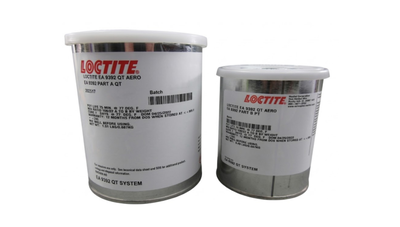
  • Loctite EA 9392 AERO Epoxy Adhesive

    Loctite EA 9392 AERO Epoxy Adhesive

    • 1,000 psi Aluminum Lap Shear
    • Thixotropic Gap-Filling Control
    • 75-Minute Working Window
  • Loctite EA 9395 AERO EPOXY ADHESIVE

    Loctite EA 9395 AERO EPOXY ADHESIVE

    • 1,200 psi Lap Shear
    • Thixotropic Application Control
    • Ambient-Temperature Bonding Cure
  • Loctite EA 9396

    Loctite EA 9396

    • Low Mixed Viscosity
    • 120-Minute Pot Life
    • MMM-A-132 Type 1 Class 3 Qualification
  • Loctite EA 956 AERO EPOXY ADHESIVE

    Loctite EA 956 AERO EPOXY ADHESIVE

    • 1,000 psi Lap Shear
    • Room-Temperature or Accelerated Heat Cure
    • Low-Viscosity Adhesive Application
  • Loctite E-30CL EPOXY ADHESIVE

    Loctite E-30CL EPOXY ADHESIVE

    • Minimally Shrinking Epoxy Bondline
    • Two-Part Ambient-Cure Processing
    • Adhesion to Glass
  • Huntsman Epocast 50A1/9816

    Huntsman Epocast 50A1/9816

    • Two-Component Epoxy System
    • 7,770 mPa s Resin Viscosity
    • EPOCAST 50-A1/Hardener 9816 System
  • Loctite EA 9837.1 030OST AERO

    Loctite EA 9837.1 030OST AERO

    • Long-Open-Time Composite Surfacing
    • Fast 121/177 deg C Cure
    • High-Adhesion Composite Surface Film
  • ALPHA AutoClean 40 Electronic Cleaner

    ALPHA AutoClean 40 Electronic Cleaner

    • Ready-to-Use Aqueous Cleaning
    • Immersion, Ultrasonic, or Manual Cleaning
    • Non-Flammable Water-Based Formulation
  • Loctite EA 9360 AERO Epoxy Adhesive

    Loctite EA 9360 AERO Epoxy Adhesive

    • Toughened Structural Epoxy Bonding
    • 50-Minute Assembly Pot Life
    • Room-Temperature Aircraft Bonding Cure
  • EA 9628 060NW Aero

    EA 9628 060NW Aero

    • Toughened Structural Bonding
    • Knitted or Non-Woven Nylon Carrier
    • Lap-Shear, Peel, and Environmental Performance
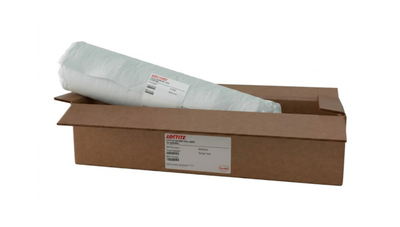
  • PP-52008G-060-TSF Nylon Peel Ply

    PP-52008G-060-TSF Nylon Peel Ply

    • 100% Nylon 6,6 Peel Ply
    • Fine Surface Impression
    • FIN 060 Scoured Heat-Set Fabric
  • LORD 310

    LORD 310

    • Thixotropic Application Control
    • 30 to 60-Minute Working Window
    • 32 MPa Cured Tensile Strength
  • 3M 2158

    3M 2158

    • High-Strength Structural Bonding
    • 120-Minute Working Window
    • 1:1 Meter-Mix Processing
  • 3M 2214

    3M 2214

    • 82 to 177 deg C Service Range
    • One-Part Non-Sag Paste
    • Multi-Substrate High-Adhesion Bonding
  • 3M 2216NS

    3M 2216NS

    • Flexible Shock/Vibration/Thermal-Cycling Resistance
    • High Peel and Shear Strength
    • Visual Two-Part Mix Confirmation
  • 3M DP100NS

    3M DP100NS

    • 15 to 20-Minute Working Window
    • Paste Consistency for Bonding
    • Machinable Cured Bonding
  • 3M DP105

    3M DP105

    • Retains Its Clear
    • Flexible Cured Adhesive
    • 4-Minute Working Window
  • 3M DP420NS

    3M DP420NS

    • High-Strength Structural Bonding
    • Toughened Epoxy Bonding
    • Non-Sag Placement Control
  • 3M DP460NS

    3M DP460NS

    • Non-Sag Placement Control
    • 60-Minute Working Window
    • High Shear and Peel Strength
  • LOCTITE ABLESTIK 2111

    LOCTITE ABLESTIK 2111

    • Thixotropic Vertical/Overhead Bonding
    • 24 N/mm^2 Aluminum Lap Shear
    • Glass/Metal/Plastic Substrate Compatibility
  • ABLESTIK 342-3.5

    ABLESTIK 342-3.5

    • Two-Part Ambient-Cure Processing
    • 5,000 mPa s Application Viscosity
    • 29.0 N/mm^2 Aluminum Lap Shear
  • ABLESTIK 45LV

    ABLESTIK 45LV

    • Flexible Cured Adhesive
    • 16,000 to 30,000 mPa s Mixed Viscosity
    • 16 kV/mm Dielectric Strength
  • ABLESTIK 970-1N1

    ABLESTIK 970-1N1

    • Thixotropic Application Control
    • 20.7 N/mm^2 Aluminum Lap Shear
    • 90-Minute Working Window
  • ABLESTIK D275

    ABLESTIK D275

    • 31 N/mm^2 Aluminum Lap Shear
    • 60-Minute 100 deg C Cure
    • Semi-Rigid Cured Material
  • ABLESTIK FDA2

    ABLESTIK FDA 2

    • 1.20 x 10^14 ohm-cm Volume Resistivity
    • 3-Hour Working Window
    • 1,800 psi Aluminum Lap Shear
  • ABLESTIK FDA22

    ABLESTIK FDA 22

    • 1.50 x 10^14 ohm-cm Volume Resistivity
    • 3-Hour Working Window
    • 2,100 psi Aluminum Lap Shear
  • ABLESTIK FDA2T

    ABLESTIK FDA 2T

    • 1.20 x 10^14 ohm-cm Volume Resistivity
    • 3-Hour Working Window
    • 1,800 psi Aluminum Lap Shear
  • ABLESTIK GA 47-2LV

    ABLESTIK GA 47-2LV

    • Gyro-Flotation-Fluid-Compatible Instrument Bonding
    • 25 ppm/deg C Linear Thermal Expansion
    • 2-Hour 95 deg C Cure
  • ABLESTIK SF40

    ABLESTIK SF 40

    • Low-Density Syntactic Foam Adhesive
    • Thixotropic Vertical-Surface Control
    • Room-Temperature Adhesive Cure
  • ARALDITE 1570FST

    ARALDITE 1570FST

    • Aerospace Flame/Smoke/Toxicity Performance
    • Extended Working-Time Room-Temperature Cure
    • Structural Aircraft-Interior Bonding
  • ARALDITE 2011

    ARALDITE 2011

    • Rubber-to-Wood Epoxy Bonding
    • 2-Hour Working Window
    • 30.4 MPa Aluminum Lap Shear
  • ARALDITE 2012

    ARALDITE 2012

    • 20-Minute Working Window
    • High-Strength Structural Bonding
    • Broad Substrate Range
  • ARALDITE 2013-1

    ARALDITE 2013-1

    • Thixotropic Vertical-Surface Control
    • 80 to 90-Minute Working Window
    • 17 MPa Lap Shear
  • ARALDITE 2014

    ARALDITE 2014

    • Water-Resistant Epoxy Bonding
    • Up to 0.197-Inch Gap Bonding
    • Low-Outgassing Vacuum Bonding
  • ARALDITE 2015-1

    ARALDITE 2015-1

    • 15 MPa Lap Shear
    • 45 to 55-Minute Working Window
    • Evaluation Across Metals
  • ARALDITE 2022-1

    ARALDITE 2022-1

    • 1 MPa Lap Shear
    • Thixotropic Gap-Filling Control
    • Multi-Substrate Bonding Capability
  • ARALDITE 2028-1

    ARALDITE 2028-1

    • Transparent UV-Stable Bonding
    • 6 to 8-Minute Pot Life
    • 60% Cured Elongation
  • ARALDITE 2031-1

    ARALDITE 2031-1

    • Toughened Structural Bonding
    • 60 to 70-Minute Working Window
    • High Weathering Resistance Supported by Tropical-Weathering
  • ARALDITE 2051

    ARALDITE 2051

    • Rapid 15-Minute Strength Development
    • 1:1 Non-Sag Cartridge Processing
    • 20 MPa structural Lap Shear
  • ARALDITE 5049

    ARALDITE 5049

    • High-Strength Structural Bonding
    • 75-Minute Gel Window
    • Water-Resistant Bonding Service
  • ARALDITE 5864

    ARALDITE 5864

    • Up to 5 mm Gap Filling
    • 16.5 MPa Aluminum Lap Shear
    • UL-Recognized 180 deg C Insulation Component
  • ARALDITE 5871

    ARALDITE 5871

    • Long Adhesive Open Time
    • High Shear and Peel Strength
    • Multi-Material Electrical-Insulation Bonding
  • ARALDITE AV170

    ARALDITE AV170

    • Up to 120 deg C Heat Resistance
    • Up to 3 mm Gap Filling
    • Heat-Resistant Gap-Filling Bonding
  • ARALDITE AV 8503

    ARALDITE AV 8503

    • One-Minute Fixturing Time
    • Heat-Resistant Bonding Service
    • 1:1 Controlled Mixing
  • ARALDITE AW106

    ARALDITE AW106

    • Multi-Material Epoxy Bonding
    • Long Adhesive Working Time
    • Electrically Insulating Epoxy
  • ARALDITE AW139

    ARALDITE AW139

    • Two-Component Room-Temperature Epoxy
    • High-Temperature Chemical Resistance
    • Multi-Material Metal/Composite/Electronics Bonding
  • ARALDITE AW8595

    ARALDITE AW 8595

    • 1:1 mix ratio
    • Room temperature curing
    • Strong curing mechanical properties
  • ARALDITE CW1302

    ARALDITE CW 1302

    • Thermally Conductive Thermal Interface
    • Low Water Absorption
    • Good Long-Term Thermal Resistance
  • CG 1305

    CG 1305

    • Medium Density Syntactic
    • High-Strength Structural Bonding
    • Pourable Bonding Material
  • DEVCON 10760

    DEVCON 10760

    • Titanium-Reinforced Epoxy Putty
    • Non-Sag Placement Control
    • Machinery Repair Applications
  • DEVCON PLASTIC STEEL

    DEVCON PLASTIC STEEL

    • Room-Temperature Adhesive Cure
    • 45-Minute Working Window
    • 2,800 psi Cured Tensile Strength
  • DEVCON PLASTIC WELDER

    DEVCON PLASTIC WELDER

    • Steel-to-Wood Methacrylate Bonding
    • 3-Minute Open Time
    • 20.6 MPa Cured Tensile Strength
  • CONAPOXY AD-10

    CONAPOXY AD-10

    • One-Component Epoxy Adhesive/Potting Compound
    • 3,000 psi Aluminum Lap Shear
    • 93 to 204 deg C Cure Temperatures
  • ELANTAS K-22

    ELANTAS K-22

    • Metal, Rubber, and Wood Bonding
    • 20-Minute Working Window
    • 2,500 psi Shear Strength
  • EPIBOND 1217

    EPIBOND 1217

    • Quick-Set Epoxy Adhesive
    • Room-Temperature Epoxy Cure
    • 1:1 Mix Ratio
  • EPIBOND 420

    EPIBOND 420

    • Structural Applications Epoxy Bonding
    • Room-Temperature Adhesive Cure
    • Extremely Tough and Resilient
  • EPIBOND 8543

    EPIBOND 8543

    • Fast Setting Epoxy Bonding
    • 1:1 Controlled Mixing
    • Paste Consistency for Bonding
  • EPOCAST 35-A/927

    EPOCAST 35-A/927

    • 149 deg C Laminating Performance
    • 4 to 5-Hour Work Life
    • BMS 8-214 Glass-Fabric Lamination
  • HARDENER HV 8503

    HARDENER HV 8503

    • One-Minute Fixturing Time
    • Heat-Resistant Curing Service
    • 1:1 Controlled Mixing
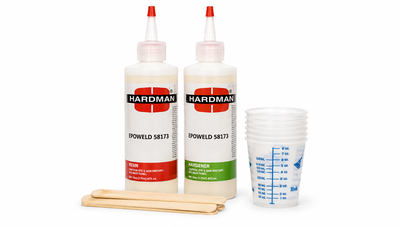
  • HARDMAN EPOWELD 58173

    HARDMAN EPOWELD 58173

    • 5-Minute Gel Time
    • Cure Down to -18 deg C
    • Multi-Substrate Epoxy Bonding
  • LOCTITE 9430

    LOCTITE 9430

    • 4,700 psi Lap Shear
    • 50-Minute Working Window
    • Up to 0.1-Inch Gap Bonding
  • HYSOL E-40HT

    LOCTITE EA E-40HT

    • Extended work life
    • High structural bond strength
    • Thermal and chemical resistance
  • INSULGEL 70 CC

    INSULGEL 70 CC

    • Low-Shrinkage Thermal-Shock-Resistant Epoxy
    • Three Curing-Agent Options
    • Shore D 43 to 80 Hardness
  • LOCTITE 1C

    LOCTITE EA 1C

    • Multi-Material Metal/Plastic/Wood Bonding
    • Machineable Sandable Cured Epoxy
    • Low-Outgassing Epoxy Adhesive
  • LOCTITE E-00CL

    LOCTITE E-00CL

    • 1:1 Two-Component Epoxy
    • 3.5-Minute Working Life
    • Electrically Insulating Epoxy
  • LOCTITE E-00NS

    LOCTITE E-00NS

    • Clear Two-Component Epoxy
    • 3.5-Minute Working Life
    • High-Dielectric-Strength Epoxy Adhesive
  • LOCTITE E-04

    LOCTITE E-04

    • Two-Component Adhesive System
    • Thixotropic Application Control
    • Low-Shrinkage Epoxy Bonding
  • LOCTITE E-05MR

    LOCTITE E-05MR

    • Ultra-Clear 1:1 Epoxy
    • Fast Adhesive Fixture
    • 34 kV/mm Dielectric Strength
  • LOCTITE E-214HP

    LOCTITE E-214HP

    • One-Component Adhesive System
    • Heat-Activated Bonding Cure
    • Thermal Shock Resistance
  • LOCTITE E-40FL

    LOCTITE E-40FL

    • Toughened Epoxy Bonding
    • Medium Owrking Life
    • Shock and Vibration Resistance
  • LOCTITE E-60HP

    LOCTITE E-60HP

    • Toughened Epoxy Adhesive
    • 60-Minute Working Life
    • Strong Structural Adhesion
  • LOCTITE EA 3981

    LOCTITE EA 3981

    • One-Component No-Mix Adhesive
    • Heat Cure as Low as 100 deg C
    • Disposable-Needle/Syringe/Lancet Cannula Bonding
  • LOCTITE EA 445

    LOCTITE EA 445

    • Pre-Measured Two-Component Mixer Cup
    • 2 to 3-Minute Gel Time
    • Drillable, Tappable, Sandable Cured Epoxy
  • LOCTITE EA 608

    LOCTITE EA 608

    • Clear Fast-Setting Structural Epoxy
    • 1:1 Weight/Volume Mixing
    • Metal and Plastic Bonding
  • LOCTITE EA 9309NA

    LOCTITE EA 9309NA

    • High Peel Strength on Prepared Aluminum
    • Glass, Metal, and Wood Bonding
    • 1-Hour 180 deg F Cure
  • LOCTITE EA 9394C-2

    LOCTITE EA 9394C-2

    • 1-Hour 204 deg C Cure
    • Extended Working Window for Controlled Assembly Operations
    • Qualified to MMM-A-132 Type Ii
  • LOCTITE EA 9394S

    LOCTITE EA 9394S

    • 28.9 MPa Aluminum Lap Shear
    • Controlled Two-Part Processing
    • Paste-Form Adhesive Application
  • LOCTITE EA 9396.6MD

    LOCTITE EA 9396.6MD

    • Two-Part Potting/Edge-Fill Syntactic Epoxy
    • Controlled Processing Window
    • Elevated-Temperature Mechanical Properties
  • LOCTITE EA 9396C-2

    LOCTITE EA 9396C-2

    • Extended Processing Window
    • 1-Hour Cure Cycle
    • Non-MDA Curing and Application
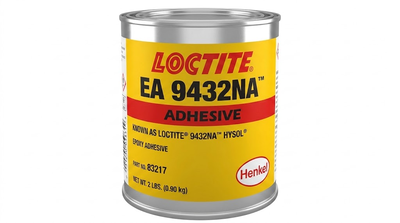
  • LOCTITE EA 9432NA

    LOCTITE EA 9432NA

    • Thixotropic Non-Sag Placement
    • 30-Minute 300 deg F Cure
    • 3,800 psi Aluminum Shear
  • LOCTITE EA 9460

    LOCTITE EA 9460

    • Impact/Fatigue-Resistant Cured Epoxy
    • 40 to 65-Minute Pot Life
    • Multi-Material Metal/Thermoplastic/Laminate Bonding
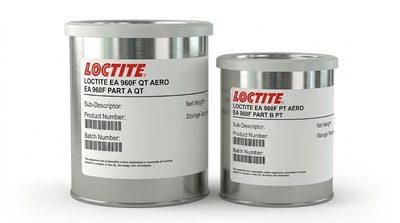
  • LOCTITE EA 960F

    LOCTITE EA 960F

    • Aircraft Fairing and Smoothing
    • Controlled Rapid Processing
    • Documented Aluminum Bond Performance
  • LOCTITE EA 9696

    LOCTITE EA 9696

    • High-Toughness Aerospace Bonding
    • Broad Controlled Cure Window
    • 2,000-Hour Environmental Conditioning
  • LOCTITE EA D609

    LOCTITE EA D609

    • 10-Minute Handling Time
    • Self-Leveling Flowable Placement
    • Fuel and Water Resistance
  • LOCTITE EA E-120HP

    LOCTITE EA E-120HP

    • 120-Minute Working Life
    • Peel, Impact, Thermal-Shock, and Chemical Resistance
    • Aerospace and Industrial Bonding
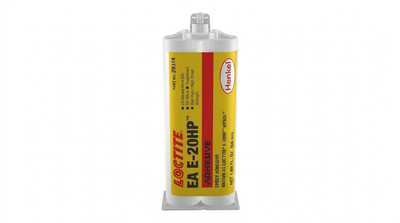
  • LOCTITE EA E-20HP

    LOCTITE EA E-20HP

    • Glass-to-Wood Epoxy Bonding
    • 20-Minute Working Window
    • 20 kV/mm Dielectric Strength
  • LOCTITE EA E-20NS

    LOCTITE EA E-20NS

    • Non-Sag Vertical Bonding
    • Tough High-Peel/Shear Bonding
    • Electrically Insulating Multi-Material Bonding
  • LOCTITE EA E214HP

    LOCTITE EA E214HP

    • One-Component, No-Mix Epoxy Paste Simplifies Material Preparation
    • 37 N/mm^2 Stainless-Steel Lap Shear
    • 22 kV/mm Dielectric Strength
  • LOCTITE EA E-310

    LOCTITE EA E-310

    • Glass, Metal, and Plastic Bonding
    • 6,000 psi Shear Strength
    • Up to 5.1 mm Gap Filling
  • LOCTITE EA M-121HP

    LOCTITE EA M-121HP

    • Non-Sag Placement Control
    • Two-Part, Room-Temperature-Curing System
    • Prepared Metals Bonding
  • LOCTITE EA M-31

    LOCTITE EA M-31

    • Ultra-Clear Bonding Material
    • 30-Minute Working Window
    • 19.7 kV/mm Dielectric Strength
  • LOCTITE EA0151

    LOCTITE EA 0151

    • Clear, Two-Component Epoxy
    • Sixty-Minute Working Window
    • Room-Temperature Adhesive Cure
  • LOCTITE EA 9306NA

    LOCTITE EA 9306NA

    • One-Component, Heat-Curing Epoxy Paste
    • Low-Exotherm Bonding Processing
    • 34.5 MPa Aluminum Lap Shear
  • LOCTITE EA9394

    LOCTITE EA 9394

    • Two-Part Aerospace Structural Epoxy Paste
    • 177 deg C Service Temperature
    • MMM-A-132 Qualified Epoxy
  • LOCTITE HY4090

    LOCTITE HY4090

    • Cyanoacrylate/Epoxy Hybrid Adhesive
    • Below 180-Second Fixture Time
    • Steel/Aluminum/Polycarbonate Lap-Shear Bonding
  • LOCTITE M-21HP

    LOCTITE M-21HP

    • Two-Component Adhesive System
    • High Peel Resistance
    • Room-Temperature Curing Epoxy Bonding
  • LORD 2850

    LORD 2850

    • 62.1 MPa Compressive Strength
    • Low-Outgassing 0.01% CVCM
    • Trowel or Injection Application
  • LORD 304-1

    LORD 304-1

    • High-Viscosity Placement Control
    • Rubber, Wood, and FRP Bonding
    • Durable Cured Performance with Environmental
  • LORD 305-1

    LORD 305-1

    • Medium-Viscosity Application Control
    • Rubber-to-Wood Epoxy Bonding
    • Chemically, Environmentally and Temperature Resistant
  • LORD 305-1/2

    LORD 305-1/2

    • Medium-Viscosity Application Control
    • Rubber-to-Wood Epoxy Bonding
    • Chemically, Environmentally and Temperature Resistant
  • LORD 305-2

    LORD 305-2

    • Medium-Viscosity Application Control
    • Rubber-to-Wood Epoxy Bonding
    • Chemically, Environmentally and Temperature Resistant
  • LORD 306-1

    LORD 306-1

    • High-Viscosity Non-Sag Gap Filling
    • Documented Chemical/Moisture/Weather Resistance
    • MIL-A-24456 Compliance Scope
  • LORD 3135

    LORD 3135

    • Broad Multi-Material Structural Bonding
    • Low-Shrinkage Epoxy System
    • Documented NASA/MMM-A-134/MIL-A-8623A Compliance
  • LORD 3170

    LORD 3170

    • Bond Strength Down to -253 deg C
    • Low-Outgassing Aerospace Epoxy
    • Equal-Volume Room-Temperature Cure
  • LORD 320

    LORD 320

    • Primerless Automotive-SMC Adhesion
    • -40 to 204 deg C Service Range
    • Solvent-Free Nonflammable Epoxy
  • LORD 320/310B-BLK

    LORD 320/310B

    • Two-Component Epoxy for Treated Cured Rubber
    • 30 to 60-Minute Working Window
    • Durability Under Humidity Bonding
  • LORD 320/322

    LORD 320/322

    • Primerless Automotive-SMC Adhesion
    • -40 to 204 deg C Service Range
    • Solvent-Free Nonflammable Epoxy
  • LORD 363

    LORD 363

    • 3 to 5-Minute Working Window
    • Self-Leveling Flowable Placement
    • Solvent-Free Bonding Formulation
  • MP 5405

    MP 5405

    • Multi-Substrate Structural Adhesion
    • Documented Water/Salt-Spray/Acid/Solvent Resistance
    • 3 to 5-Minute Handling Time
  • MP 54460

    MP 54460

    • Multi-Substrate Structural Adhesion
    • Documented Water/Salt-Spray/Acid/Solvent Resistance
    • 3 to 5-Minute Handling Time
  • PERMABOND ES550

    PERMABOND ES550

    • Toughened Structural Bonding
    • High-Viscosity Placement Control
    • No-Mix Bonding Processing
  • PERMABOND ES558

    PERMABOND ES558

    • Solder-Like Heat-Activated Adhesive Flow
    • 25 to 35 kJ/m^2 Impact Resistance
    • One-Part No-Mix Heat Cure
  • PERMABOND ES569

    PERMABOND ES569

    • Single-Part Heat-Cure Structural Epoxy
    • Up to 5 mm Gap Filling
    • Solder-Reflow-Resistant Electronics Bonding
  • PERMABOND ES578

    PERMABOND ES578

    • 1.0 W/(m K) Thermal Conductivity
    • Heat-Activated Flow for 5 mm Gaps
    • UL 94 V-0 Classification
  • PERMABOND ET5145

    PERMABOND ET5145

    • FDA 175.105/175.300 Compliance
    • Impact-Resistant Structural Bonding
    • 50 to 80-Minute Pot Life
  • PERMABOND ET515

    PERMABOND ET515

    • Flexible Cured Adhesive
    • 10 to 20-Minute Working Window
    • Up to 2 mm Gap Filling
  • PERMABOND ET538

    PERMABOND ET538

    • Thixotropic Vertical-Surface Control
    • 120 to 150-Minute Working Window
    • High-Strength Structural Bonding
  • PERMABOND ET540

    PERMABOND ET540

    • Toughened Epoxy Bonding
    • 120 to 150-Minute Working Window
    • Metal-to-Wood Epoxy Bonding
  • PERMABOND ET5422

    PERMABOND ET5422

    • Impact and Vibration Resistance
    • Up to 5 mm Gap Filling
    • Elevated-Temperature Bond Strength
  • 3M 1838

    3M 1838

    • Controlled-Flow Structural Bonding
    • One-Hour Positioning Window
    • Rigid High-Shear Performance
  • 3M 3024

    3M 3024

    • High Honeycomb-Gap Expansion
    • Flexible 121-176 deg C Cure
    • Low-Sag Core Splicing
  • 3M AF325LS.59

    3M AF325LS.59

    • Integrated Composite Surfacing Layer
    • Smooth Low Porosity Finish
    • Configuration Specific Lightning Protection
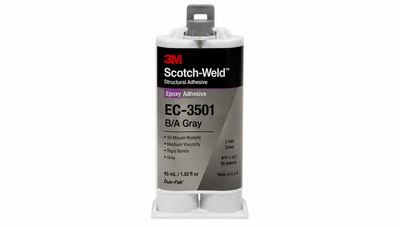
  • 3M EC-3501

    3M EC-3501

    • Rapid Structural Repair Bonding
    • Controlled Composite Defect Filling
    • High Room Temperature Shear
  • 3M EC-3542

    3M EC-3542

    • Flame Retardant Interior Assembly
    • Low Density Insert Bonding
    • Controlled Non Sag Work Life
  • 3M EC-9300

    3M EC-9300

    • Five-Hour Assembly Work Life
    • Room-Temperature or Mild-Heat Cure
    • Qualified Aircraft Interior FST Data
  • 3M TC-2707

    3M TC-2707

    • Thermally Conductive Bonding
    • 60-Minute Working Window
    • Low-Viscosity Gap Filling
  • 3M TC-2810

    3M TC-2810

    • Thermally Conductive Insulation
    • Extended Assembly Work Life
    • Pre-Assembly Tack and Gap Fill
  • ARALDITE 2014-2

    ARALDITE 2014-2

    • 110-Minute Pot Life
    • Non-Sagging Five-Millimeter Gap Fill
    • High Chemical and Water Resistance
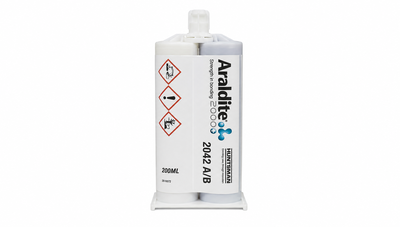
  • ARALDITE 2042

    ARALDITE 2042

    • One-Hour Room-Temperature Handling
    • Convenient 1:1 Volume Mixing
    • High-Elongation Flexible Bonding
  • ARALDITE 2050

    ARALDITE 2050

    • Controlled 1:1 Volume Mixing
    • Low-Temperature Cure Capability
    • Mixed-Material Structural Bonding
  • CHEMLOK 485

    CHEMLOK 485

    • One-Month Mixed Working Life
    • 17.8 to 25.4 um Film
    • Spray, Brush or Dip Application
  • LOCTITE EA 11C

    LOCTITE EA 11C

    • Machinable, Low-Outgassing Cured Material
    • Bonds Metals, Most Plastics and Wood
    • Room-Temperature or Heat Cure
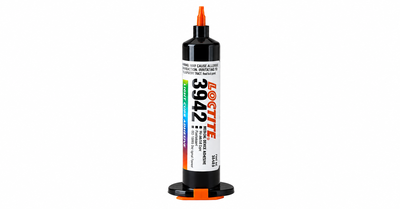
  • LOCTITE EA 3942

    LOCTITE EA 3942

    • 900-1,600 mPa s Dispensing
    • Sub-5-Second UV Fixture
    • UV-Fluorescent Assembly Inspection
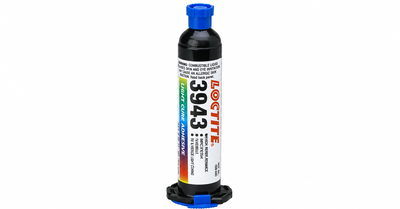
  • LOCTITE EA 3943

    LOCTITE EA 3943

    • Cannula-Focused Medium-Viscosity Dispensing
    • Sub-5-Second UV Fixture
    • UV-Fluorescent Assembly Inspection
  • LOCTITE EA 7000

    LOCTITE EA 7000

    • Dual-Temperature Composite Cure
    • Extended 30-Day Out Time
    • Supported or Unsupported Film
  • LOCTITE EA 9017

    LOCTITE EA 9017

    • Premeasured Resin-Hardener Pack
    • Fast 4-6-Minute Handling
    • Machinable Cured Epoxy Finish
  • LOCTITE EA 9340

    LOCTITE EA 9340

    • Visual 1:1 Mix Confirmation
    • Extended 90-Minute Pot Life
    • High-Temperature Shear Retention
  • LOCTITE EA 9394.2

    LOCTITE EA 9394.2

    • Thixotropic Gap-Filling Control
    • Fast 4-Hour Set
    • 24-Hour Room-Temperature Cure
  • LOCTITE EA 9658

    LOCTITE EA 9658

    • 177 deg C Nacelle Bonding
    • Extended 15-Day Assembly Window
    • Controlled Flow and Flash
  • LOCTITE EA 9814

    LOCTITE EA 9814

    • One-Part Syntactic Processing
    • Low-Density Honeycomb Core Filling
    • Fire-Retardant Compressive Support
  • LOCTITE EA 9845SF

    LOCTITE EA 9845SF

    • Co-Cured Composite Surfacing
    • Paint-Ready Surface Quality
    • Reduced Core Crush and Porosity
  • LOCTITE EA 9845SF.030OST

    LOCTITE EA 9845SF.030OST

    • Controlled .030 OST Surface Layer
    • Co-Cure Composite Integration
    • Paint-Ready Composite Finish
  • LOCTITE EA 9891RP

    LOCTITE EA 9891RP

    • Visual Color-Change Mix Verification
    • Room-Temperature Abradable Seal Repair
    • Abrasion-Resistant Paste Restoration
  • LOCTITE EA 9895

    LOCTITE EA 9895

    • One-Piece Peel-Ply Removal
    • Bond-Ready Surface Without Sanding
    • 177 deg C Prepreg Co-Cure
  • LOCTITE EA E-40EXP

    LOCTITE EA E-40EXP

    • Self-Leveling Horizontal Potting
    • Controlled 2:1 Metered Mixing
    • Room-Temperature Potting Cure
  • LOCTITE EA9690.030NW

    LOCTITE EA9690.030NW

    • High-Peel Structural Bonding
    • Low-Flow Film Placement
    • Thin Non-Woven Film Handling
  • LOCTITE EF562S

    LOCTITE EF562S

    • Non-Asbestos Honeycomb Bonding
    • Roll-or-Sheet Layup Flexibility
    • Expanding Core Reinforcement
  • LORD 309-1D

    LORD 309-1D

    • Non-Sag Vertical Bonding
    • 1.5-2 Hour Work Time
    • Room- or Heat-Cure Flexibility
  • ROYAL DOUBLE BUBBLE 04001

    ROYAL DOUBLE BUBBLE 04001

    • Fast 15-to-30-Minute Handling
    • Premeasured 1:1 Packet Mixing
    • High-Cohesion Structural Repair
  • ROYAL DOUBLE BUBBLE 04004

    ROYAL DOUBLE BUBBLE 04004

    • Water-Clear Bondline Appearance
    • Self-Leveling Solventless Flow
    • Extended 60-Minute Working Window
  • ROYAL DOUBLE BUBBLE 04006

    ROYAL DOUBLE BUBBLE 04006

    • Low-Viscosity Thin-Bondline Flow
    • Extended 45-Minute Working Window
    • Progressive Room-Temperature Strength Build
  • ROYAL DOUBLE BUBBLE 04007

    ROYAL DOUBLE BUBBLE 04007

    • High-Peel Vibration-Resistant Bonding
    • Extended 3-Hour Working Window
    • 121 deg C Service Capability
  • ROYAL DOUBLE BUBBLE 04008

    ROYAL DOUBLE BUBBLE 04008

    • Non-Sag Vertical Bonding Control
    • Fast 15-to-30-Minute Handling
    • 82 deg C Service Capability

Frequently asked questions

Frequently Asked Questions about Structural Epoxy Adhesives

Why is exact stoichiometric mixing so critical for 2K epoxies?

Unlike polyester resins where the catalyst simply acts as a trigger, epoxy hardeners react chemically with the resin on a molecular level. If the mix ratio is off by even a few percent, unreacted resin or hardener remains in the polymer matrix. This drastically reduces the cured adhesive's mechanical strength, chemical resistance, and Tg.

Can the cure time of a room-temperature epoxy be accelerated?

Yes. Adding heat accelerates the crosslinking reaction. As a general rule of thumb, based on the Arrhenius equation, every 10°C increase in ambient temperature cuts the curing time roughly in half. Heat curing also often yields a tighter polymer network, resulting in higher ultimate strength.

What causes an exothermic reaction when mixing large batches?

The chemical reaction between the resin and hardener releases heat. In a large, confined mass, such as a mixing cup, that heat cannot dissipate, which accelerates the reaction further and generates even more heat. This runaway thermal event can cause the adhesive to flash-cure, smoke, or even melt plastic containers. Mix only what can be applied within the pot life, or pour it into a shallow tray to help dissipate heat.

What is the difference between work life and cure time?

Work life, often called pot life, is the amount of time available to mix, apply, and position the parts before the epoxy begins to thicken and gel. Cure time is the total time required for the adhesive to reach its absolute maximum structural strength.

How is uncured epoxy cleaned up?

Wipe away any excess, unmixed, or uncured epoxy immediately using acetone or isopropyl alcohol. Once the epoxy has fully cured, solvents will no longer work, and it must be removed mechanically via sanding, grinding, or scraping.

Are epoxy adhesives waterproof?

Yes. Once fully cured, standard epoxy adhesives are highly water-resistant and often entirely waterproof. This is why they are standard structural adhesives in marine repair and boat building.


Learn more

Types of Structural Epoxies

Four primary epoxy systems engineered for distinct cure mechanisms, processing methods, and performance profiles

Two-Component 2K Epoxy Resin and Hardener
Mix-Activated
2K

1. Two-Component (2K) Epoxies

The most versatile and widely used structural adhesives worldwide. The curing mechanism relies on the physical mixing of two distinct chemicals at the point of application. A 2K system consists of an epoxide resin (Part A) and a hardener (Part B).

The Resin: Typically a bisphenol-A or bisphenol-F derivative, containing highly reactive epoxide rings. The Hardener: Most commonly an amine, mercaptan, polyamide, or anhydride.

When mixed, the hardener acts as a nucleophile, attacking and opening the epoxide rings. This triggers a chain reaction, linking short polymer chains into a dense, infinite 3D network.

2K Systems – Key Processing Characteristics
Stoichiometric Dependency

Requires a mathematically exact ratio of resin to hardener (e.g. 1:1, 2:1, 10:1). An off-ratio mix leaves unreacted molecules in the matrix, drastically lowering Tg and structural integrity.

Room Temperature Cure & Heat Acceleration

Most amine-cured 2K epoxies crosslink immediately at approximately 22°C (72°F). Heat (60–80°C) accelerates curing from days to hours while often improving ultimate lap shear strength.

Exothermic Reaction

Crosslinking releases heat. Mixing a large mass accelerates heat buildup, which speeds curing further and may result in thermal runaway (flash cure) if not properly managed.

 
Heat-Activated
1K

2. One-Component (1K) Epoxies

One-component epoxies eliminate the need for metering and mixing equipment on the assembly line. Pre-mixed by the manufacturer, they rely entirely on thermal energy to trigger crosslinking. The epoxide resin is pre-blended with a latent curing agent, often a solid, microscopic powder such as dicyandiamide (dicy).

At room temperature, this latent hardener is completely insoluble and unreactive. When exposed to elevated temperatures, typically 120°C to 150°C (250°F to 300°F), the hardener melts or chemically unlocks, dissolving into the resin and initiating crosslinking.

One-Component 1K Epoxy Automotive Assembly

1K Systems – Key Processing Characteristics

Characteristic Detail
Infinite Working Time Reaction won't start without extreme heat, giving unlimited pot life at room temperature for complex assembly.
No Mixing Variables Eliminates off-ratio mixing and entrapped air bubbles, producing consistent, void-free structural joints.
High Ultimate Strength & Tg High-temperature cure produces tightly crosslinked networks, among the highest shear strength and thermal stability available.
Storage Requirements Often requires cold storage (refrigeration/freezing) to prevent premature reaction of the latent hardener.

Favored in automated, high-volume manufacturing environments like automotive assembly.

 
Specialty Epoxy Chemistries
 
Hybrid Epoxy Toughened

3. Toughened Epoxies

Standard epoxies are highly crosslinked, rigid thermoset polymers. While this rigidity gives exceptional tensile and lap-shear strength, it creates a critical vulnerability: brittleness. Under peel stress, cleavage, or sudden impact, rigid epoxies cannot stretch to absorb energy and fracture catastrophically.

By incorporating elastomeric or thermoplastic modifiers into the resin matrix, chemists create an adhesive that retains epoxy-level shear strength while gaining the flexibility and impact resistance of a polyurethane or acrylic.

Engineering Trade-Offs:

Lower Tg than rigid counterparts, increased susceptibility to solvent/chemical degradation, and lower tensile modulus. Rigid epoxy remains superior for precision tooling or optical applications requiring zero micro-movement.

 
Filled Matrix Conductive

4. Thermally & Electrically Conductive Epoxies

Standard epoxy resins are inherently excellent electrical and thermal insulators. Modern high-density electronics require adhesives that can manage extreme heat loads or pass electrical current, achieved by densely loading the matrix (often up to 80% by weight) with metallic, ceramic, or carbon-based micro-particles.

Electrically conductive formulations use silver flakes or spheres as lead-free solder replacements. Thermally conductive, electrically insulating systems use alumina, aluminum nitride, or boron nitride to pull heat away without risking a short.

Key Uses: Die Attach & Surface Mount Adhesive, Heat Sink Bonding (TIM), EMI/RF Shielding


Epoxy Curing Mechanism

The molecular journey from unreacted monomers to a fully crosslinked structural bond

Stage 1

Before Mixing (Separate Monomers)

At baseline, the adhesive exists as unreacted, free-flowing polymer chains with no mechanical strength. Epoxy resin monomers feature reactive triangular epoxide groups; hardener monomers feature reactive amine groups (NH2).

2K (Mix-Activated): the two groups are physically isolated and remain stable. 1K (Heat-Activated): pre-blended, but the hardener is latent, dormant until extreme heat is applied.

Epoxy Stage 1 Separate Monomers
Stage 2

Mixing & Initial Reaction (Gelation)

The polyaddition reaction begins as the adhesive irreversibly transforms from liquid to solid: amine groups attack and open the strained epoxide rings, hardener molecules bridge multiple chains via their NH2 sites, and the network thickens into a rubbery, immovable gel, marking the end of open time.

For 2K systems, this begins the moment the parts are mixed at room temperature. For 1K systems, it only begins once heat is applied.

Epoxy Stage 2 Gelation
Stage 3

Fully Cured Crosslinked Network

The loose initial network transforms into an infinite three-dimensional lattice, the source of the epoxy's mechanical strength, dimensional stability, and chemical inertness.

As millions of covalent bonds lock into place, the exothermic release of thermal energy acts as a catalyst, accelerating remaining unreacted molecules and driving the cure to rapid completion.

Epoxy Stage 3 Fully Cross-Linked Network
 

Epoxy Curing Timeline

Exact times vary by formulation and ambient temperature, but the chemical journey always follows four distinct stages

Curing Stage Typical Timeframe* Physical State What Is Happening Actionable Phase
1. Working Time (Open Time / Pot Life) Minutes to hours Liquid or spreadable paste Resin and hardener just mixed; chains short enough to allow free flow. Apply & Position: mix, apply, and position parts exactly as needed.
2. Gelation (Initial Cure) Minutes to hours (begins as working time ends) Rubbery, tacky gel Polymer matrix grows large enough to stop flowing; exothermic heat peaks. Do Not Disturb: unworkable but lacks holding strength, moving parts now breaks forming bonds.
3. Fixture Time (Handling Strength) 15 minutes to 24 hours Solid, hard to the touch Crosslinking network mostly established; supports its own weight. Remove Clamps: jigs can be removed; handle gently, no heavy loads yet.
4. Full Cure (Maximum Strength) 24 hours to 7 days Fully hardened thermoset plastic Polyaddition reaction 100% complete; every bond locked into the 3D lattice. Active Service: bears full structural loads, machining, and chemical exposure.

*Timeframes are highly dependent on the specific adhesive formulation and ambient temperature. Heat drastically accelerates this timeline; cold temperatures extend it.


Key Performance Benefits

Why structural epoxies remain the benchmark for permanent, load-bearing bonds


1. Unmatched Mechanical Strength

High Load Capacity: tensile and shear strengths can exceed 30–60 MPa, matching or exceeding welding or rivets in many heavy-duty applications.

Uniform Stress Distribution: unlike screws or rivets that create localized stress points, epoxy spreads load evenly across the bonded surface.

Superior Durability: excellent compressive, flexural, and tensile strength resist mechanical stress and fatigue, outperforming cyanoacrylates and polyurethanes.


2. Versatility in Substrate Bonding

Dissimilar Materials: easily joins metals, plastics, wood, glass, ceramics, and concrete.

Thermal Expansion: spans materials with differing thermal expansion coefficients while managing stress well during temperature fluctuations.


3. Environmental & Chemical Resilience

Harsh Conditions: the dense crosslinked structure provides an impermeable barrier against moisture, humidity, and prolonged saltwater immersion, suitable for marine and outdoor environments.

Chemical Resistance: cured epoxies resist degradation from oils, solvents, greases, salts, and mild acids, ideal for automotive, aerospace, and laboratory settings.


4. Physical & Dimensional Stability

Low Shrinkage: extremely low shrinkage during cure ensures a precise, permanent, dimensionally stable bond.

Gap-Filling Properties: fills voids and uneven gaps between poorly matched parts, advantageous in construction and complex manufacturing.

No Volatile Byproducts: cures via molecular crosslinking rather than solvent evaporation, releasing virtually no VOCs.


Core Industrial Applications

Structural epoxies across the industries where permanent, load-bearing bonds are non-negotiable

Industry Application
Aerospace & Aviation Structural bonding of fuselages, honeycomb assemblies, and interior components, for weight reduction, high-temp resistance, and altitude tolerance.
Electronics & Telecom Potting and encapsulating circuit boards and microelectronics, for insulation and shielding from moisture, thermal cycling, and shock.
Automotive & Transportation Bonding composite panels, metal body parts, and EV battery housings, replacing welding while improving efficiency and rigidity.
Construction & Civil Engineering Infrastructure repair, crack injection, structural beam bonding, and anchoring rebar or bolts into concrete.
Marine & Shipbuilding Assembling, waterproofing, and repairing hulls, decks, and underwater components, with high saltwater resistance.
Wind Energy Primary adhesive for bonding massive, load-bearing wind turbine blades together.
Tooling & Prototyping Casting master models, jigs, fixtures, and vacuum-forming molds requiring dimensional stability and heat resistance.
Structural Epoxy Industrial Applications
 

Need Help Selecting the Right Structural Epoxy?

Chemistry selection depends on your substrate combination, required cure speed, service temperature, and processing equipment. Our technical team provides product selection support, trial quantity sourcing, and application guidance across 2K, 1K, toughened, and conductive epoxy systems.

Structural Epoxy – Quick Reference

2K EpoxyGeneral purpose, room-temp cure, broad use
1K EpoxyHeat-cure, no mixing, automated assembly
ToughenedImpact resistance, peel strength, dynamic loads
ConductiveElectronics, thermal/electrical pathways

Leading Brands Trust in Our Products and Services

  • Jabil
  • Linxens
  • Magna
  • Medtronic
  • NXP
  • Philips
  • Semikron
  • Teledyne
  • Thales
  • Vishay
  • ZF
  • AMS
  • Apple
  • Audi
  • Broadcom
  • Borgwarner
  • Bosch
  • Eaton
  • Henkel
  • Honeywell
  • Hysol
  • Intel
Products that Perform|Knowledge that Serves|Service that Delivers