Instant Adhesives

One-Component & Low-Viscosity

Instant Adhesives

Instant adhesives, commonly known as cyanoacrylates or super glues, cure in seconds through a moisture-triggered anionic polymerization rather than solvent evaporation or heat. A thin film of surface moisture, present on nearly all substrates, is enough to trigger the reaction, making these one-part, no-mix systems ideal for fast-turnaround assembly, prototyping, and repair work.

Ethyl cyanoacrylates are the general-purpose workhorse of the family, offering fast fixture times and strong adhesion across plastics, rubbers, metals, and most porous and non-porous substrates. Methyl cyanoacrylates cure even faster and typically deliver higher bond strength on metals and less porous materials, though they can be more brittle and prone to surface blooming (frosting) on some plastics. Both chemistries are available in a range of viscosities, from water-thin formulations that wick into tight-fitting joints to gel and thickened grades formulated for vertical surfaces and gap-filling applications.

65 products

  • 3M™ Fastbond™ 2000NF

    3M™ Fastbond™ 2000NF

    • Quick bonding without heat
    • Immediate handling strength.
    • Post-formable and heat resistant
  • Loctite 495

    Loctite 495

    • One-Part Adhesive Form
    • Multi-Substrate Assembly Fixturing
    • Low-Viscosity Adhesive Application
  • PERMABOND 105

    PERMABOND 105

    • 5 to 20-Second Fixture Time
    • Low-Viscosity Single-Component Adhesive
    • Hard-to-Bond Plastic and Rubber Bonding
  • PERMABOND 2011

    PERMABOND 2011

    • Thixotropic Application Control
    • 5 to 10-Second Fixturing Time
    • One-Part Moisture-Cure Adhesive
  • 3M CA40H

    3M CA40H

    • Higher-Viscosity Controlled Dispensing
    • EPDM, Vinyl, and Aluminum Bonding
    • Alignment-Friendly Slower Set Time
  • CYBERBOND 2241

    CYBERBOND 2241

    • Toughened Structural Bonding
    • Metal, Plastic, and Rubber Bonding
    • Up to 140 deg C Service
  • LOCTITE 382

    LOCTITE 382

    • One-Component Adhesive System
    • Clear Gel Formulation
    • Gap-Filling Cyanoacrylate Bonding
  • LOCTITE 4013

    LOCTITE 4013

    • Medium-Viscosity Cyanoacrylate Adhesive
    • ISO 10993 Biocompatibility
    • Disposable Medical-Device Assembly
  • LOCTITE 403

    LOCTITE 403

    • Low-Odor Bonding Processing
    • Low-Blooming Bonding Cure
    • High-Viscosity Placement Control
  • LOCTITE 404

    LOCTITE 404

    • Optically Clear Bondline
    • Fast Adhesive Cure
    • Low-Viscosity Adhesive Application
  • LOCTITE 4081

    LOCTITE 4081

    • Very-Low-Viscosity Cyanoacrylate Adhesive
    • Low-Odor Adhesive Cure
    • Disposable Medical-Device Assembly
  • LOCTITE 409

    LOCTITE 409

    • High-Viscosity Placement Control
    • to Plastics Bonding
    • Reduced Dripping and Migration
  • LOCTITE 410

    LOCTITE 410

    • Rubber-Toughened Cyanoacrylate Adhesive
    • Visible Cured Bondline
    • Dynamic/Impact-Loading Adhesive Bonding
  • LOCTITE 411

    LOCTITE 411

    • High-Viscosity Cyanoacrylate Gel
    • Controlled Non-Sag Application
    • High Peel Strength
  • LOCTITE 415

    LOCTITE 415

    • High-Viscosity Cyanoacrylate Adhesive
    • Documented MIL-A-46050C/A-A-3097 Qualification
    • Chemical and Environmental Resistance
  • LOCTITE 416

    LOCTITE 416

    • High-Viscosity One-Part Cyanoacrylate
    • Documented MIL-A-46050C/A-A-3097 Qualification
    • Multi-Material Plastic/Rubber/Metal Bonding
  • LOCTITE 422

    LOCTITE 422

    • High-Viscosity Cyanoacrylate Gel
    • Transparent Cured Bondline
    • Documented MIL-A-46050C/A-A-3097 Qualification
  • LOCTITE 426

    LOCTITE 426

    • Toughened Structural Bonding
    • Impact-Resistant Cyanoacrylate Bonding
    • Gel-Consistency Bonding Placement
  • LOCTITE 444

    LOCTITE 444

    • TAK PAK Accelerator Compatibility
    • One-Component Cyanoacrylate Adhesive
    • Documented A-A-3097 Qualification
  • LOCTITE 454

    LOCTITE 454

    • Thixotropic Application Control
    • High-Strength Structural Bonding
    • Moisture-Cure Bonding Processing
  • LOCTITE 455

    LOCTITE 455

    • Low-Odor Bonding Processing
    • Gel-Consistency Bonding Placement
    • Low-Blooming Bonding Cure
  • LOCTITE 496

    LOCTITE 496

    • Fast Bonding Cure
    • Medium-Viscosity Application Control
    • One-Component Adhesive System
  • LOCTITE 498

    LOCTITE 498

    • General-Purpose Cyanoacrylate Adhesive
    • Cured Thermal-Cycling Resistance
    • Cured Humidity Resistance
  • LOCTITE 499

    LOCTITE 499

    • Non-Sag Cyanoacrylate Gel
    • One-Component Adhesive System
    • Vertical/Overhead Adhesive Applications
  • LOCTITE SICOMET 100

    LOCTITE SICOMET 100

    • 0.01 to 0.50 mm Gap Fill
    • Fast Moisture-Cure Fixturing
    • Strong Rubber/Plastic Adhesion
  • PERMABOND 101

    PERMABOND 101

    • 2 to 3 mPa s Viscosity Range
    • 2 to 10-Second Fixturing Time
    • 25 kV/mm Dielectric Strength
  • PERMABOND 102

    PERMABOND 102

    • Low 70–90 mPa·s viscosity and a 0.15 mm maximum gap fill make PERMABOND® 102 suitable for close-fitting components and controlled small-gap bonding.
    • Low 70–90 mPa·s viscosity and a 0.15 mm maximum gap fill make PERMABOND® 102 suitable for close-fitting components and controlled small-gap bonding.
    • Typical fixture times of 5–15 seconds support rapid handling and high-speed industrial assembly
  • PERMABOND 108

    PERMABOND 108

    • 400 to 600 mPa s Viscosity Range
    • 10-Second Fixturing Time
    • 25 kV/mm Dielectric Strength
  • PERMABOND 130UV

    PERMABOND 130UV

    • Rapid UV Bonding Cure
    • 200 mPa s Application Viscosity
    • Under 405 Nm LED Conditions
  • PERMABOND 200

    PERMABOND 200

    • 1,500 mPa s Application Viscosity
    • 15-Second Fixturing Time
    • 22 N/mm^2 Shear Strength
  • PERMABOND 2010

    PERMABOND 2010

    • Thixotropic Vertical-Surface Control
    • Up to 0.5 mm Gap Filling
    • 25 kV/mm Dielectric Strength
  • PERMABOND 2050

    PERMABOND 2050

    • Toughened Structural Bonding
    • 1,200 to 1,800 mPa s Viscosity Range
    • 5 to 15-Second Fixturing Time
  • PERMABOND 240

    PERMABOND 240

    • 15 to 20-Second Fixturing Time
    • Up to 0.4 mm Gap Filling
    • WRAS/MIL-A-46050C Qualification Scope
  • PERMABOND 268

    PERMABOND 268

    • 0.43 mm Maximum Gap Fill
    • 5 to 10-Second Handling Time
    • MIL-A-46050C Type II Class 3 Approval
  • PERMABOND 4C20

    PERMABOND 4C20

    • 400 to 600 mPa s Viscosity Range
    • 10-Second Fixturing Time
    • 25 kV/mm Dielectric Strength
  • PERMABOND 737

    PERMABOND 737

    • Toughened Structural Bonding
    • No-Mix Bonding Processing
    • High-Viscosity Gap Filling
  • PERMABOND 738

    PERMABOND 738

    • Toughened cyanoacrylate formulation is designed to provide improved impact and peel performance compared with conventional cyanoacrylates
    • Approximately 5,000 mPa·s viscosity and a maximum gap fill of 0.51 mm support controlled dispensing and bonding of less tightly fitted components.
    • The black formulation is specifically suited to dark assemblies, with documented applications including speaker assembly and black PVC wire bonding
  • PERMABOND 790

    PERMABOND 790

    • 2 to 3-Second Handling Time
    • Surface-Insensitive Acidic-Substrate Bonding
    • Low-Viscosity Wicking Post-Assembly Bonding
  • PERMABOND 792

    PERMABOND 792

    • Fast Surface-Insensitive Acidic-Substrate Bonding
    • 2 to 3-Second Fixture Time
    • MIL-A-46050C/NSF S4 Compliance
  • PERMABOND 795

    PERMABOND 795

    • Moderate-Viscosity Surface-Insensitive Adhesive
    • 0.18 mm Maximum Gap Fill
    • MIL-A-46050C/CID A-A-3097 Compliance
  • PERMABOND 799

    PERMABOND 799

    • Up to 0.5 mm Gap Fill
    • 8-Second Fixture Time
    • MIL-A-46050C Type II Class 3 Compliance
  • PERMABOND 910

    PERMABOND 910

    • 10 to 15-Second Fixturing Time
    • 70 to 90 mPa s Viscosity Range
    • ISO 4587 Multi-Material Shear Strength
  • PERMABOND 910FS
  • PERMABOND 919

    PERMABOND 919

    • Up to 250 deg C Service
    • 20-Second Fixturing Time
    • MIL-A-46050C Type V Class 1 Approval
  • PERMABOND 920

    PERMABOND 920

    • Post-Cured Service up to 250 deg C
    • 15 to 20-Second Steel Fixture
    • MIL-A-46050C Type V Class 2 Compliance
  • PERMABOND 922

    PERMABOND 922

    • Up to 250 deg C Service
    • Up to 0.4 mm Gap Filling
    • MIL-A-46050C Type V Class 3 Approval
  • PERMABOND 940

    PERMABOND 940

    • Non-Frosting Alkoxyethyl Formulation
    • Low-Odor Cyanoacrylate Bonding
    • Fast Multi-Substrate Fixturing
  • PERMABOND 943

    PERMABOND 943

    • Low-Odor Alkoxyethyl Formulation
    • Non-Frosting Non-Fogging Bonding
    • Fast Multi-Substrate Fixturing
  • LOCTITE 3092

    LOCTITE 3092

    • 5 mm Gap Filling
    • Non-Sag Vertical Bonding
    • Fast Instant Fixturing
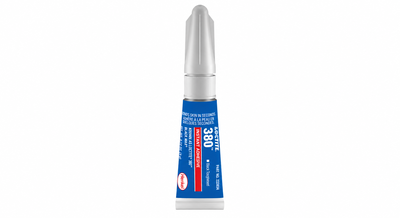
  • LOCTITE 380

    LOCTITE 380

    • Rubber-Toughened Shock Resistance
    • Black Bondline Identification
    • Fast Multi-Substrate Fixturing
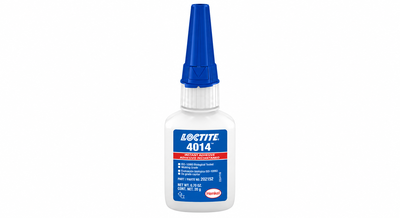
  • LOCTITE 4014

    LOCTITE 4014

    • Very-Low-Viscosity Precision Bonding
    • Fast Mixed-Material Fixturing
    • Heat-Conditioned Bond Strength
  • LOCTITE 408

    LOCTITE 408

    • Low-Odor Low-Blooming Bonding
    • Very-Low-Viscosity Joint Wetting
    • Rapid Porous-Material Fixturing
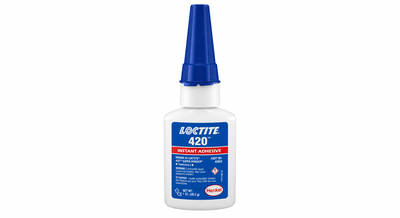
  • LOCTITE 420

    LOCTITE 420

    • Very-Low-Viscosity Capillary Bonding
    • Fast Close-Fitting Assembly
    • Broad Metal-Plastic-Rubber Bonding
  • LOCTITE 4210

    LOCTITE 4210

    • Elastomer-Toughened Impact Resistance
    • Low-Viscosity Thin-Gap Bonding
    • Fast Multi-Substrate Fixturing
  • LOCTITE 425

    LOCTITE 425

    • Fast Plated-Fastener Fixturing
    • Low-Strength Serviceable Retention
    • Pre- or Post-Applied Locking
  • LOCTITE 430

    LOCTITE 430

    • Low-Viscosity Metal Bonding
    • Fast Thin-Gap Fixturing
    • Broad Rubber-Plastic Compatibility
  • LOCTITE 4307

    LOCTITE 4307

    • Rapid UV Surface Cure
    • Humidity Secondary Cure
    • Fluorescent Application Inspection
  • LOCTITE 431

    LOCTITE 431

    • Medium-Viscosity Application Control
    • Rapid Multi-Material Bonding
    • Strong Shear-Oriented Performance
  • LOCTITE 435

    LOCTITE 435

    • Rubber-Toughened Peel Resistance
    • Low-Viscosity Rapid Bonding
    • Porous-Material Bonding Range
  • LOCTITE 438

    LOCTITE 438

    • Black Rubber-Toughened Bonding
    • Enhanced Shock and Peel Resistance
    • Low-Viscosity Multi-Material Assembly
  • LOCTITE 460

    LOCTITE 460

    • Low-Odor Low-Blooming Cure
    • Very Fast Porous-Substrate Fixturing
    • Low-Viscosity Vapor-Controlled Bonding
  • LOCTITE 493

    LOCTITE 493

    • Very-Low-Viscosity Capillary Bonding
    • Fast Metal-Focused Fixturing
    • Broad Rubber-Plastic Bonding
  • LOCTITE 713

    LOCTITE 713

    • Pre- or Post-Applied Activation
    • Rapid 30-Second Drying
    • Short Controlled On-Part Window
  • ROYAL QT-2

    ROYAL QT-2

    • Accelerates curing of compatible instant adhesive products, including applications where the adhesive bead is not fully confined between two parts.
    • Supports curing on porous materials, acidic surfaces, and under low-humidity conditions.
    • Low-viscosity 3 cps acetone-based formulation supports application by brushing or spraying.
  • ROYAL RP-5

    ROYAL RP-5

    • Fast-setting general-purpose adhesive with 5-second fixture cure and handling strength reported within 5 to 10 seconds.
    • Low 5 cps viscosity combined with documented bonding performance across metals, plastics, phenolic, and rubber substrates.
    • Documented grit-blasted steel shear strength of 28 N/mm² and tensile strength of 20 N/mm² under the stated ASTM/DIN test methods.

Frequently asked questions

Frequently Asked Questions about Instant Adhesives

What is the difference between cyanoacrylate and "super glue"?

There is no chemical difference. Cyanoacrylate is the technical name for the polymer chemistry, while super glue is the common consumer term for the same class of instant adhesives. Industrial-grade cyanoacrylates are formulated with tighter viscosity control, extended shelf life, and application-specific properties not typically found in consumer-grade products.

What is the difference between ethyl and methyl cyanoacrylate?

Ethyl cyanoacrylate is the most widely used general-purpose grade, offering a good balance of cure speed, flexibility, and broad substrate compatibility. Methyl cyanoacrylate cures faster and often bonds more aggressively to metals and rigid, low-porosity substrates, but it tends to be more brittle and is more prone to blooming, a visible white haze that can form around the bond line from vaporized, unreacted adhesive. The right choice depends on the substrate, required bond strength, and whether cosmetic appearance matters.

Why does cyanoacrylate cure so quickly without mixing or heat?

Cyanoacrylate monomers are highly reactive to weak bases, and the trace moisture naturally present on almost every surface is enough to initiate anionic polymerization. Once triggered, the monomer chains link together in a chain reaction that completes in seconds to minutes, depending on the substrate, bondline thickness, humidity, and ambient temperature.

Why do some porous substrates cure slower or fail to bond well?

Highly porous or very dry substrates can absorb the adhesive into the material before enough surface moisture is available to trigger a full cure, sometimes leaving uncured monomer starved of the moisture it needs to polymerize completely. This can result in a weaker bond or an incomplete cure at the interface. Thicker or gel-viscosity cyanoacrylates, or the use of a compatible primer, can help address this on porous or absorbent substrates.

What causes the white haze or "blooming" around a cyanoacrylate bond?

Blooming occurs when cyanoacrylate vapor from the curing adhesive condenses on nearby surfaces and polymerizes on contact with moisture in the air, leaving a visible white residue around the bond line. It is more common with fast-curing, low-viscosity grades and in enclosed or poorly ventilated spaces. Lower-bloom formulations, adequate ventilation, and controlled dispensing can reduce this effect.

When is an activator or primer needed with cyanoacrylate adhesives?

Activators and primers are used when the substrate lacks sufficient surface moisture or reactive chemistry to cure the adhesive on its own, such as with certain low surface energy plastics, or when a near-instant, full-depth cure is required regardless of ambient humidity. An activator is typically applied to one surface before the adhesive is applied to the other, accelerating and deepening the cure through the full bondline.

Are cyanoacrylate bonds flexible or impact-resistant?

Standard cyanoacrylates form rigid, glassy bonds that offer excellent tensile and shear strength but limited flexibility, making them prone to failure under sudden impact or repeated flexing. Rubber-toughened cyanoacrylate formulations are available for applications requiring greater peel strength and impact resistance, trading some rigidity and heat resistance for improved durability under dynamic loads.

How well do cyanoacrylate bonds hold up to heat?

Standard cyanoacrylates typically have a lower continuous service temperature range than epoxies or structural acrylics, and prolonged exposure to elevated temperatures can degrade bond strength over time. Specialty high-temperature-resistant cyanoacrylate grades are available for applications that need to withstand higher sustained heat, though they generally still fall short of epoxy or silicone performance at extreme temperatures.


Learn more

Instant Adhesives: Ethyl & Methyl Cyanoacrylates

Instant adhesives cure in seconds through a moisture-triggered reaction rather than solvent evaporation or heat. A thin film of surface moisture, present on nearly all substrates, is enough to trigger polymerization, making these one-part, no-mix systems ideal for fast-turnaround assembly, prototyping, and repair work.

Ethyl cyanoacrylates are the general-purpose workhorse of the family, while methyl cyanoacrylates cure even faster and typically bond more aggressively to metals and low-porosity substrates, at the cost of some flexibility and a higher tendency to bloom.

Instant adhesive bonding

Ethyl vs Methyl Cyanoacrylate Selector Guide

Both chemistries cure by the same mechanism; the choice comes down to substrate, cure speed, and cosmetic requirements

Ethyl Cyanoacrylate
Cure Speed
★★★★☆
Flexibility
★★★★☆
Blooming Risk
★★★☆☆
Metal Adhesion
★★★☆☆
Substrate Range
★★★★★
Best for general-purpose bonding, plastics, rubbers, mixed substrates
Methyl Cyanoacrylate
Cure Speed
★★★★★
Flexibility
★★☆☆☆
Blooming Risk
★★☆☆☆
Metal Adhesion
★★★★★
Substrate Range
★★★☆☆
Best for metals, rigid low-porosity substrates, fastest fixture time

Key Performance Considerations

Moisture-Triggered Cure

No mixing or heat required. Trace surface moisture is enough to trigger cure in seconds to minutes, depending on bondline thickness and ambient humidity.

Porous Substrate Limits

Highly porous or very dry substrates can absorb adhesive before enough moisture triggers a full cure, sometimes weakening the bond. Gel grades or primers can help.

Rigid, Low-Flex Bonds

Standard grades form rigid, glassy bonds with strong tensile and shear strength but limited flexibility. Toughened, rubber-modified grades trade some rigidity for impact resistance.

Bloom & Blush

Vapor from curing adhesive can condense and haze nearby surfaces, especially with fast, low-viscosity grades in enclosed spaces. Low-bloom formulations reduce this.

Core Applications

Electronics Assembly

Tacking small components, wire staking, and rapid fixture during PCB assembly where clamp time isn't available.

Plastics & Rubber

Fast-turnaround bonding of housings, gaskets, and molded parts in prototyping and production repair.

Metal Fabrication

Rapid tacking of small metal parts before welding, or as a standalone bond for low-load metal assemblies.

MRO & Field Repair

Quick fixes on the shop floor or in the field where clamping equipment or long cure windows aren't practical.

Need Help Selecting the Right Instant Adhesive?

Chemistry selection depends on your substrate, required fixture time, flexibility needs, and whether bloom or cosmetic appearance matters. Our technical team provides product selection support, trial quantity sourcing, and application guidance across ethyl and methyl cyanoacrylate systems.

Instant Adhesive – Quick Reference

Ethyl CAGeneral purpose, flexible, broad substrates
Methyl CAFastest cure, strongest on metal, more brittle

Leading Brands Trust in Our Products and Services

  • Jabil
  • Linxens
  • Magna
  • Medtronic
  • NXP
  • Philips
  • Semikron
  • Teledyne
  • Thales
  • Vishay
  • ZF
  • AMS
  • Apple
  • Audi
  • Broadcom
  • Borgwarner
  • Bosch
  • Eaton
  • Henkel
  • Honeywell
  • Hysol
  • Intel
Products that Perform|Knowledge that Serves|Service that Delivers