Anatomic Composition of Oil Formulations
Lubricating oils and liquid dispersions consist of three core components formulated to achieve target tribological properties.
Base Oil Matrix
75% – 99%
The base fluid supplies most of the volume and establishes liquid film thickness, cooling efficiency, flow dynamics, and basic hydrodynamic load capacity. Common families include refined mineral oil, hydrocracked mineral base stocks, PAO, esters, PAG, alkylated aromatics, silicones, PFPE, and vegetable-derived esters.
Chemical Additive Package
1% – 20%
Additives work at far lower concentration than the base fluid but control decisive failure modes: antioxidants slow chemical aging, corrosion inhibitors protect wet surfaces, anti-wear and EP additives form sacrificial films, and detergents, demulsifiers, viscosity modifiers, and pour-point depressants manage deposits, water separation, and low-temperature flow.
Dispersed Solid Phase
0.5% – 10% in dispersions
Adds a third design layer, the particle-plus-interface. Lamellar solids such as MoS2 and graphite shear along preferred planes; PTFE contributes low shear and transfer-film behavior; surfactants and dispersants supply electrostatic or steric stabilization.
Solid-lubricant dispersions differ from a pure liquid oil by suspending sub-micron solid particles directly in the fluid matrix. Where a pure oil relies entirely on dissolved chemistry and film thickness, a dispersion adds a physical, mechanical barrier that continues to protect surfaces even after the liquid film has locally collapsed.
Stability should be assessed over realistic time and temperature, not only from the appearance of a freshly sonicated sample, using checks such as sediment height, re-dispersibility, particle-size distribution, and centrifuge screening.
API Base Oil Classification Rules
Because the base oil constitutes 70% to 99% of a finished lubricant, its chemical purity and molecular structure dictate the baseline performance of the fluid, specifically its thermal stability, oxidation resistance, and low-temperature fluidity.
The American Petroleum Institute (API) categorizes base stock oils into five groups based on refining methods, saturation levels, sulfur content, and viscosity index (VI).
| API Group |
Saturates (%) |
Sulfur (%) |
Viscosity Index (VI) |
Manufacturing & Structure |
| Group I |
< 90 |
> 0.03 |
80 to 119 |
Solvent refining; aromatic heavy hydrocarbon mixture. |
| Group II |
≥ 90 |
≤ 0.03 |
80 to 119 |
Hydrocracking & hydrotreating; lower aromatics. |
| Group III |
≥ 90 |
≤ 0.03 |
≥ 120 |
Severe isomerization hydrocracking; paraffinic synthesis. |
| Group IV |
100 |
0 |
130 to 180 |
Polyalphaolefins (PAO); synthesized oligomerization of 1-decene. |
| Group V |
Variable |
Variable |
Up to >220 |
All synthetics outside Group IV (esters, PAG, silicone, PFPE, AN). |
Group I: Legacy Mineral Oils
Chemistry: Manufactured using older solvent-refining processes, with a high percentage of unstable aromatic compounds and sulfur.
Applications: General-purpose circulating oils, older marine engines, heavily formulated metalworking fluids.
Group II: Modern Industrial Workhorse
Chemistry: Manufactured via hydrotreating and hydrocracking, breaking down aromatics and removing sulfur.
Applications: Modern hydraulic fluids (ISO VG 32–68), industrial gear oils, standard automotive engine oils.
Group III: Highly Refined "Synthetics"
Chemistry: Severe hydrocracking and catalytic dewaxing restructure hydrocarbons into stable paraffinic chains.
Applications: High-performance compressor oils, premium turbine oils, top-tier automotive lubricants.
Group IV: Polyalphaolefins (PAO)
Chemistry: Fully synthetic; built by oligomerizing ethylene gas into 1-decene, then synthesized into PAO.
Applications: Extreme-cold hydraulics, high-speed CNC spindles, heavy-duty synthetic gear oils.
Group V: Specialty Synthetics
Chemistry: A catch-all category for base stocks that don't fit into Groups I through IV, including esters, PAG, and silicones/PFPEs.
Applications: Jet turbines, worm gear drives, refrigeration compressors, radiation-resistant systems.
Lubricating Mechanisms & Stribeck Curve Dynamics
Liquid lubricant behavior is governed by the Hersey number (η · N / P), where η represents dynamic viscosity, N is rotational speed, and P is normal load. Performance spans three tribological regimes defined by the Film Thickness Ratio (Λ = hmin / √(σ1² + σ2²)), where hmin is minimum film thickness and σ1, σ2 are the surface roughness values of the mating parts.
Boundary Lubrication
Λ < 1.2
High loads, low speeds, or low viscosity. Surface asperities make direct contact. Dispersed solid particles (MoS2, PTFE) physically separate metal peaks to minimize adhesive friction.
Mixed Lubrication
1.2 ≤ Λ ≤ 3
Partial fluid film supports part of the load, while boundary additive films and solid dispersions support the rest.
Hydrodynamic / EHL
Λ > 3
Contacting surfaces are fully separated by a continuous fluid film. Localized pressures (1–3 GPa) in non-conformal contacts exponentially increase oil viscosity, elasticizing the contacting metals.
ISO Viscosity Grade (ISO 3448) & Selection Guide
The ISO Viscosity Grade (ISO VG) system, defined under ISO 3448, is the globally accepted classification for industrial liquid lubricants, based on kinematic viscosity measured at 40°C (104°F), expressed in centistokes (cSt) or mm²/s.
Viscosity must be matched to the rotational speed of the bearing. Higher speeds require lower viscosities to prevent excessive fluid friction (viscous drag) and overheating. The DN factor is used to calculate this:
DN Speed Factor = dm × N
Where dm = (bore diameter + outer diameter) / 2 (mm), and N = rotational speed (RPM).
DN > 500,000 (High Speed)
Requires ISO VG 10 to 32
DN 100,000–500,000 (Medium Speed)
Requires ISO VG 46 to 150
DN < 100,000 (Low Speed)
Requires ISO VG 220 to 680
Higher loads compress the oil film. If viscosity is too low, the elastohydrodynamic (EHL) film collapses, leading to boundary contact. Lighter loads favor lower viscosity (ISO VG 32–68) for better cooling and lower energy use, while heavy or shock loads favor higher viscosity (ISO VG 320–680) for a thicker, more resilient fluid film.
ISO Viscosity Grade Classification Table
| ISO Grade |
Midpoint @ 40°C (cSt) |
Min (cSt) |
Max (cSt) |
Typical Application |
| ISO VG 2 |
2.2 |
1.98 |
2.42 |
Ultra-high-speed spindles (>100,000 RPM) |
| ISO VG 10 |
10.0 |
9.00 |
11.00 |
High-speed precision machine tool spindles |
| ISO VG 22 |
22.0 |
19.8 |
24.2 |
Airline lubricators, cold-climate hydraulics |
| ISO VG 32 |
32.0 |
28.8 |
35.2 |
Standard industrial hydraulics, air compressors |
| ISO VG 46 |
46.0 |
41.4 |
50.6 |
Heavy-duty mobile hydraulics, circulating systems |
| ISO VG 68 |
68.0 |
61.2 |
74.8 |
Slide-ways, lightly loaded gearboxes, vacuum pumps |
| ISO VG 100 |
100.0 |
90.0 |
110.0 |
Moderate gearboxes, large circulating oil systems |
| ISO VG 150 |
150.0 |
135.0 |
165.0 |
Enclosed industrial gearboxes, chain drives |
| ISO VG 220 |
220.0 |
198.0 |
242.0 |
Heavy-duty spur and helical gear drives |
| ISO VG 320 |
320.0 |
288.0 |
352.0 |
Heavy shock-load gearboxes, rolling mill drives |
| ISO VG 460 |
460.0 |
414.0 |
506.0 |
Low-speed/high-load gearboxes, worm drives |
| ISO VG 680 |
680.0 |
612.0 |
748.0 |
Heavy industrial worm gears, extreme low-speed drives |
| ISO VG 1000 |
1000.0 |
900.0 |
1100.0 |
Open gear compounds, heavy dragline components |
ISO 3448 only dictates viscosity at 40°C. Industrial equipment rarely operates exactly at that temperature, and oil thins as it heats up. If operating between 70°C and 100°C, the oil's Viscosity Index (VI), a dimensionless number indicating how much viscosity changes with temperature, should also be checked.
Advantages & Disadvantages
| Advantages |
Disadvantages & Limitations |
- High heat transfer and efficient cooling via fluid circulation.
- Flows into small contacts and can be pumped, filtered, and cooled.
- Flushes away wear debris, contaminants, and moisture.
- Wide operating viscosity range achievable via viscosity index improvers.
- Dispersions provide emergency dry-run survival capability under sudden fluid loss.
|
- Requires physical containment, complex dynamic sealing, and housings.
- Risk of fluid leakage leading to environmental contamination or fire hazards.
- Solid dispersions require strict particle size control to prevent filter plugging.
- Thermal-oxidative degradation requires periodic fluid monitoring and drain intervals.
|
Key Application Sectors & Machinery Components
Lubricating oils and liquid colloidal dispersions are selected for applications requiring continuous fluid flow, active thermal dissipation, hydrodynamic/elastohydrodynamic separation, and the flushing of wear debris. Adding dispersed solid micro-particles (MoS2, PTFE, graphite, h-BN) enhances performance in machinery subjected to frequent stop-start cycles, shock loads, or extreme temperature.
1. Power Transmission & Industrial Gear Systems
Enclosed Spur, Helical, and Bevel Gears: Neat synthetic oils (ISO VG 150 to 460) maintain an elastohydrodynamic (EHL) fluid film under steady-state operating conditions.
Heavy Mining & Steel Mill Drives: Colloidal MoS2 dispersions added to heavy gear oils protect gear tooth flanks against boundary welding during sudden shock loads, heavy impact forces, or low rotational speeds.
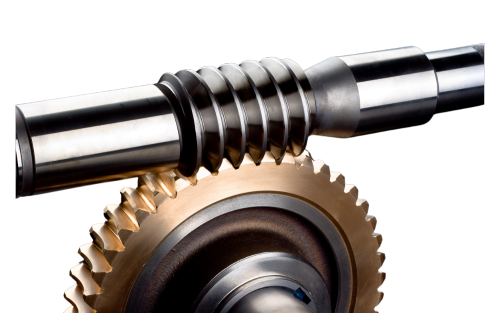
Worm Gear Drives: Synthetic polyalkylene glycol (PAG) neat oils provide a low sliding friction coefficient, reducing thermal friction generated by steel-on-bronze sliding contacts.
2. High-Speed Precision Equipment & Turbines
Machine Tool Spindles & Sewing Machines: Ultra-light neat synthetic fluids (ISO VG 2, 10, or 22) provide hydrodynamic surface separation with minimal viscous shear resistance, ensuring low running temperatures and maintaining sub-micron machining tolerances.
Steam & Gas Turbines: Group II/III mineral or PAO turbine oils (ISO VG 32 or 46) require rapid water-separating capability (demulsibility), low foaming propensity, and resistance to thermal oxidation over extended service lives, often exceeding 10,000 hours.
3. Hydraulic & Fluid Power Systems
Industrial & Mobile Hydraulics: High viscosity index (HV) anti-wear hydraulic fluids transmit mechanical force while lubricating high-pressure axial piston pumps, vane pumps, and control valves operating up to 350 bar.
Cleanroom / High-Precision Servo-Hydraulics: Fine-filtered neat synthetic esters provide flame resistance (HFDU fluids) and consistent pressure transmission without valve-sticking caused by varnish or sludge formation.
4. Extreme High-Temperature Conveyors & Processing
Ceramic Kilns, Glass Works, & Paint Curing Ovens: Synthetic polyol ester oils carrying sub-micron colloidal graphite or hexagonal boron nitride (h-BN) are fed directly to chain links and bushings operating from 200°C to over 500°C. The ester carrier wets the pin surfaces and evaporates cleanly, leaving the graphite or h-BN behind as a dry, low-friction film.
5. Metal Forming, Forging, & Break-In Operations
Machinery Running-In & Assembly: Engine oil or gear fluid blended with 3% to 5% colloidal MoS2 is applied during initial machinery commissioning, burnishing into metal micro-asperities to accelerate smooth surface bedding.
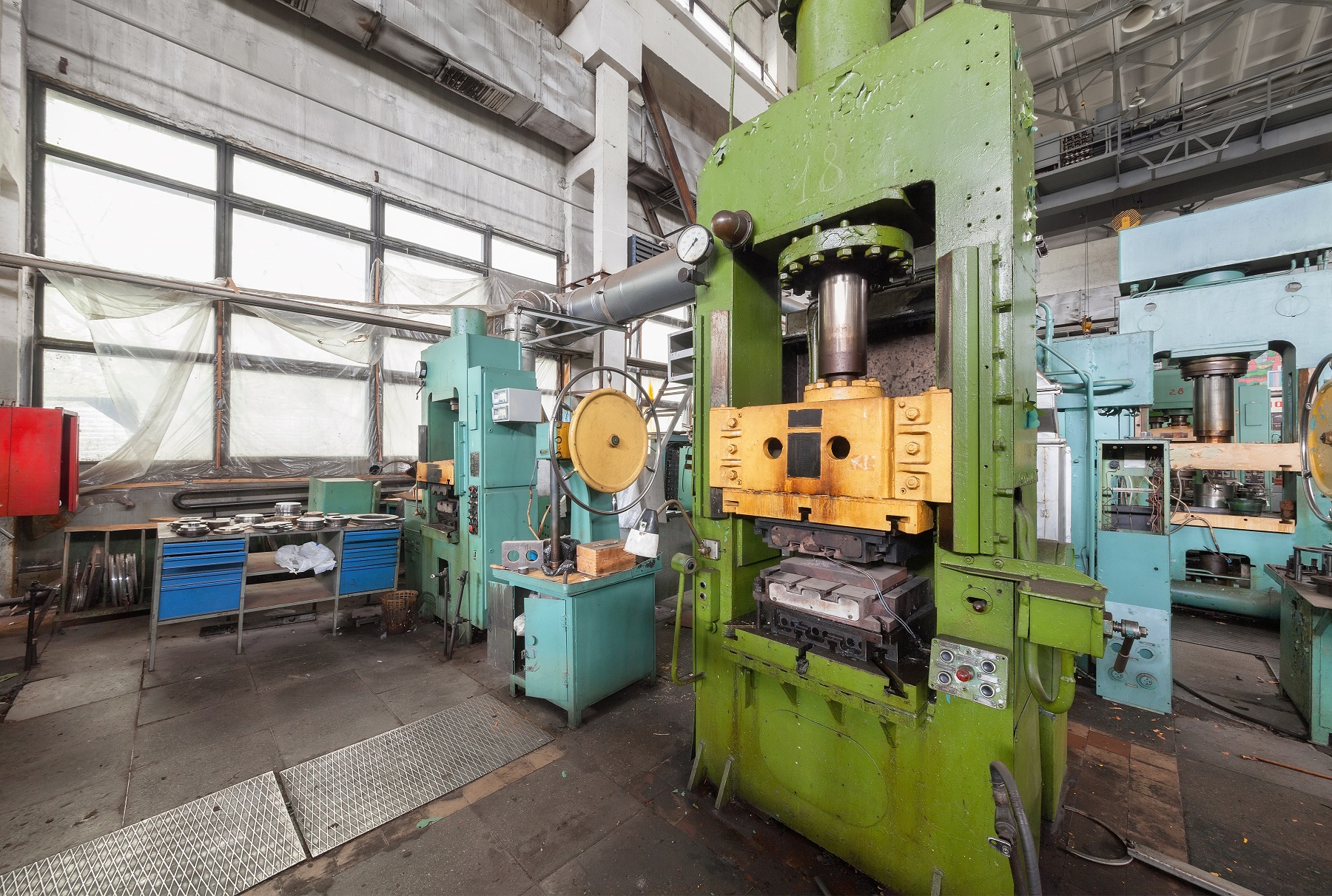
Cold Heading & Heavy Metal Stamping: Water- or oil-based colloidal suspensions of graphite or MoS2 are sprayed directly onto forging dies to reduce friction during high-deformation metal displacement.






.png)






_N_Low-O2-technology_1-2.jpg)