OPTOLINQ PM-1213 | Two-part silicone potting
Harmonization Code : 3910.00.00.90 | Silicones in Primary Forms; Others
Main features
- High optical transparency
- Excellent thermal resistance
- Excellent adhesion to different materials
Product Description
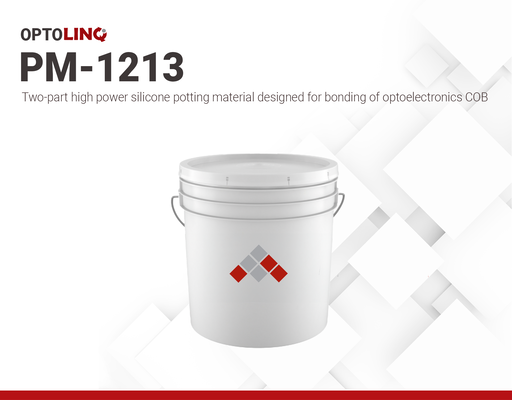
OPTOLINQ PM-1213 is a two-component clear silicone rubber potting specifically designed for the encapsulation and bonding of optoelectronic chip on board (COB) packages. Its high refractive index (1.41) and exceptional transparency minimizes optical interference, making it ideal for high-performance LED packaging applications.
OPTOLINQ PM-1213 advanced formulation provides excellent light and thermal stability, ensuring long-term performance even under challenging environmental conditions. The high adhesion strength and high elasticity of PM-1213 make it versatile for demanding applications where reliability is crucial.
Available Versions
- PM-1213G (Adhesive type)
OPTOLINQ PM-1213
Unlike other products we offer, the products listed on this page cannot currently be ordered directly from the website.
 Shipping in 6 weeks
 Shipping in 6 weeks
 Shipping in 6 weeks
TDS, SDS & Technical Documents
Technical Specifications
General Properties
Mechanical Properties
Physical Properties
Additional Information
Processing Instructions
-
Mix Parts A and B in a 100:100 weight ratio. Ensure that the mixture is uniform and free from streaks or unevenness.
-
Defoam the mixture under vacuum.
-
Typical curing conditions: First cure at 95 °C for 60 min, followed by post-cure at 150 °C for 4 hours.
- Recommended ramp up temperature is 5°C/minute from ambient
The curing conditions provided are recommended guidelines based on typical laboratory results. Actual curing parameters should be defined and validated by the user to ensure compatibility with specific materials, part geometries, and end-use requirements. It is the user’s responsibility to optimize and confirm curing conditions that meet their performance and quality standards.
Precautions
-
Addition-cure materials may be susceptible to inhibition by certain substances, including organotin and other organometallic compounds, silicone rubber with organotin catalyst, sulfur-containing materials such as polysulfones, amines, urethanes, amine-containing materials, unsaturated hydrocarbon plasticizers, and some solder flux residues. Always exercise caution and conduct thorough compatibility testing when encountering materials or chemicals of concern in your specific application to prevent potential curing issues.
-
Avoid skin and eye contact. In case of contact, rinse thoroughly with soap (for skin) or clean water (for eyes), and seek medical attention if needed.
-
Maintain a clean and ventilated workplace, using extraction trunks when necessary.
-
Wear appropriate protective equipment and minimize direct contact with the human body. Refer to the Safety Data Sheet (SDS) before use.
The technical information presented in this document is provided for reference only and does not constitute a guarantee of specific properties or performance. Actual results may vary depending on individual conditions and application methods. Users are strongly advised to perform their own testing and validation to determine suitability for their intended use and compliance with relevant regulations.
Cleaning
Uncured silicone can be easily removed using common hydrocarbon solvents, such as acetone or xylene. Polar solvents, including water and alcohols, are not recommended for this application.
Storage and Handling
Store in a ventilated, dry, and clean environment below 25 °C. Do not allow moisture to come into contact with these materials. Containers should always remain tightly sealed. For partially filled containers, it is recommended to purge them with dry air or inert gases like nitrogen to maintain product integrity. At proper storage conditions, Part A and B have a shelf life of 6 months.