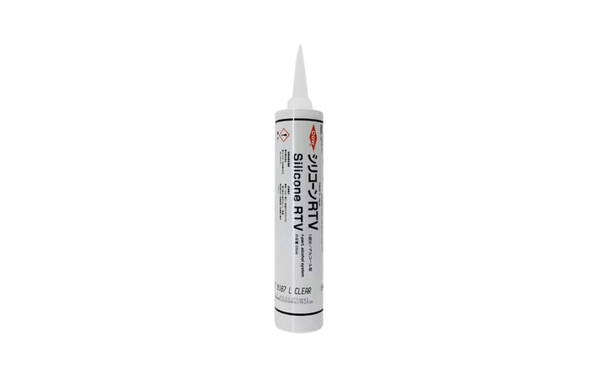
DOWSIL SE 9187 L
Harmonization Code : 3919.10.80 | Other self-adhesive plastic rolls not exceeding 20 cm wide.
Main features
- One-Part Moisture-Cure Adhesive
- Eight-Minute Tack-Free Time
- 20 kV/mm Dielectric Strength
Product Description
DOWSIL SE 9187 L Adhesive is a one-part moisture-cure silicone available in black, clear, or white. Its typical 1,100 cP viscosity supports flow, fill, and self-leveling after dispensing, and the cured material remains soft. Typical tack-free time is 8 minutes at 25 deg C. The product supports manual or automated needle dispensing and is documented for display module assembly, PCB protection, and general potting where flow and a soft cured elastomer are useful.
Key features
- Material system:: One-part moisture-cure silicone with typical 1100 cP viscosity for flow, fill, and self-leveling after dispensing.
- Flow and dispensing: Typical tack-free time is 8 minutes at 25 deg C, with manual or automated needle dispensing supported.
- Electrical performance: Typical cured properties include Shore A 17 hardness, 160% elongation, 0.5 MPa tensile strength, and 20 kV/mm dielectric strength.
Applications
- Display module assembly
- PCB protection
- General potting
TDS, SDS & Technical Documents
Technical Specifications
Physical Properties
Thermal Properties
Mechanical Properties
Electrical Properties
Additional Information
Electronics Assembly Adhesives
Very-low-viscosity one-part silicone for assembly, coating, and potting
DOWSIL SE 9187 L Adhesive is a one-part moisture-cure silicone available in black, clear, or white. Its typical 1100 cP viscosity supports flow, fill, and self-leveling after dispensing, while the cured material remains soft. The product is documented for display module assembly, PCB protection, and general potting applications.
As-Supplied Properties
Low-viscosity one-part material
The product is supplied as a single-component silicone in three color configurations.
| Property | Typical Value | Unit / Condition | State |
|---|---|---|---|
| Component count | One | - | As supplied |
| Color | Black, clear (translucent), or white | - | As supplied |
| Viscosity | 1100 | cP at supplied condition | As supplied |
Processing
Dispense onto prepared surfaces and allow moisture cure
SE 9187 L can be dispensed manually or by automated needle systems. Surface cleanliness and exposure to atmospheric moisture are important to adhesion and cure development.
- Clean the surfaces:Thoroughly clean or degrease bonding surfaces. Suitable cleaning routes include compatible solvent cleaning or degreasing; surface preparation should be selected for the actual substrate and contamination condition.
- Dispense:Use manual or automated needle dispensing according to the required bead, fill, coating, or potting geometry.
- Allow surface cure:Typical tack-free time is 8 minutes at 25 deg C. Cure progresses from the exposed surface inward because the one-part system relies on atmospheric moisture.
- Accelerate when appropriate:Mild heat below 60 deg C can be used to accelerate the moisture-cure process when appropriate.
Storage & Handling
Protect the one-part material from moisture before use
Store at or below the temperature shown on the product label, keep the original container tightly closed, and minimize headspace. Purge partially filled containers with dry air or another dry gas such as nitrogen, and use the material by the label Use Before date.
Technical Guidance
Match surface preparation and cure depth to the assembly
The low viscosity supports flow, but adhesion and through-cure remain dependent on substrate condition and access to atmospheric moisture.
Validate the actual substrate
Because substrate types and surface conditions vary, evaluate adhesion on the actual material and preparation. A lap-shear or similar test can be used to establish compatibility and minimum cure time.
Account for moisture-cure depth
Avoid highly confined spaces or deep-section cure requirements where moisture access is limited, because cure progresses from the exposed surface inward.
Limit solvent exposure
Use only for splash or intermittent solvent exposure where supported, not continuous solvent or fuel immersion. Confirm performance for the actual fluid and exposure condition.
Final-State Properties
Typical cured mechanical and electrical properties
The values below describe the cured adhesive or the documented bonded-test configuration and preserve the stated test conditions.
| Property | Typical Value | Unit / Test Condition | State |
|---|---|---|---|
| Specific gravity | 1.00 | Cured | Cured material |
| Durometer | 17 | Shore A | Cured material |
| Tensile strength | 0.5 | MPa | Cured material |
| Elongation | 160 | % | Cured material |
| Lap shear strength | 0.3 | MPa on glass | Bonded test |
| Dielectric strength | 20 | kV/mm | Cured material |
| Volume resistivity | 3.0 E+15 | ohm-cm | Cured material |
| Dielectric constant | 2.8 | at 1 MHz | Cured material |
| Dissipation factor | 0.0009 | at 1 MHz | Cured material |
Applications
Three documented electronics uses
SE 9187 L spans bonding and protective-use cases within electronics assembly.
Display module assembly
Low-viscosity silicone adhesive use in display module assembly where controlled dispensing and a soft cured elastomer are required.
PCB protection
Conformal-coating use on printed circuit boards where the flowable one-part silicone can form a soft protective layer.
General potting
General potting of supported electronic assemblies where low viscosity and a soft cured material are suitable for the geometry.
Technical support for DOWSIL SE 9187 L Adhesive
Need help evaluating SE 9187 L for display assembly, PCB coating, or a potting geometry? Krayden can help review the substrate, cleaning method, dispense route, section depth, moisture-cure environment, and the mechanical or dielectric properties needed for the intended electronics assembly.