DOWSIL LPA-4000
Harmonization Code : 3910.00.00.90 | Silicones in Primary Forms; Others
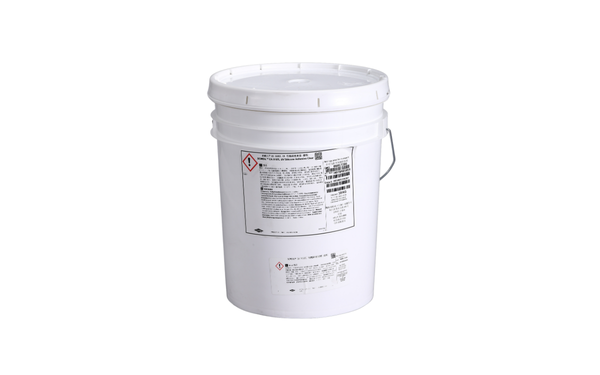
Main features
- One-Part Non-Slumping RTV Silicone
- Spray, Trowel, Brush, or Roller Application
- Thermally Conductive Coating
Product Description
DOWSIL LPA-4000 Sprayable RTV Ablative Silicone is a one-part, non-slumping silicone elastomer for aerospace thermal-protection applications. It can be applied by airless spray, trowel, brush, roller, or pressure-gun methods as an ablative coating and thermal barrier for launch structures exposed to indirect rocket blast. The material has approximately 20 minutes workable time at 25 deg C and 50% RH, with about 150 mil cure depth within 24 hours. Documented uses include strongback protection, gantry and flame-tunnel protection, and sacrificial recoating.
Key features
- Application fit: One-part non-slumping RTV silicone for spray, trowel, brush or roller application.
- Final performance:: Cured material has 0.42 W/(m.K) thermal conductivity and Shore A 55 hardness.
- Key characteristic: Documented exposure capability from -55 to 200 C for extended periods and up to 3,300 C for several seconds.
Applications
- Strongback protection
- Gantry and flame-tunnel protection
- Sacrificial recoating
Technical Specifications
No specifications available.
Additional Information
Protective Coatings
Sprayable one-part RTV silicone for sacrificial ablative thermal protection
DOWSIL LPA-4000 Sprayable RTV Ablative Silicone is a one-part, non-slumping silicone elastomer developed for aerospace thermal-protection applications. It can be applied by airless spray, trowel, brush or roller as an ablative coating and thermal barrier for launch structures exposed to indirect rocket blast.
As-Supplied Properties
Application-ready coating properties
The product is supplied as a white, viscous, one-part material. Values below are typical.
| Property | Typical Value | Method / Condition |
|---|---|---|
| Consistency | Viscous liquid | As supplied |
| Color | White | As supplied |
| Viscosity | 36,000 mPa.s | ASTM D1084 / CTM 0050, 25 deg C, CPE-52 at 10 rpm |
| Relative density | 1.51 | ASTM D722 / CTM 0022, 25 deg C |
| Tack-free time | 18 minutes | 25 deg C |
| Cure time | <24 hours | 25 deg C |
Typical values are not intended for preparing specifications.
Processing
Surface preparation and application
A clean surface is required for maximum adhesion and product performance. The coating can be sprayed with conventional airless equipment or applied manually.
- Remove loose material, dust, dirt, scale and oily residue from the surface.
- Wash cleaned surfaces with high-pressure water. Stubborn oils and grease may require a compatible solvent cleaning step.
- Apply with airless spray equipment, or use a spatula, trowel, pressure gun, low-nap roller or paint brush.
- When spraying, use hoses and fittings rated for the pressure required to atomize the material.
Working and cure window
- Workable for approximately 20 minutes at about 25 deg C and 50% RH.
- Cures in depth to approximately 150 mils within 24 hours at about 25 deg C and 50% RH.
- Typical spray pressure required to aerosolize the material is 4,000-5,000 psi.
- Masking tape should be removed before a surface skin forms.
Storage and Handling
Store sealed material at or below 32 C
When stored in the original unopened container at or below 32 deg C, the product has a usable life of 6 months from the date of manufacture.
- The product is moisture curing, so keep unused material protected from ambient exposure.
- Standard packaging is a 225 kg open-head, straight-sided steel drum.
- Clean and prepare previously ablated surfaces before recoating.
Technical Guidance
Substrate preparation and recoating considerations
The material supports several application methods, but adhesion and coating performance remain dependent on surface condition and substrate.
Typical unprimed substrates
Typical substrates include structural steel, concrete, cured silicone rubber, silicone resin laminates, stainless steel, titanium and aluminum.
Substrate limitations
The material may not adhere well to polyethylene, certain plastics or organic materials that bleed or exude plasticizers. Evaluate adhesion on the actual prepared surface.
Recoating ablative surfaces
Previously ablated silicone surfaces can be power-washed to remove residual char and oxidized silica before reapplication.
Final-State Properties
Cured physical and thermal properties
The physical properties below were measured after 7 days of cure at room temperature unless otherwise noted.
| Property | Typical Value | Method / Condition |
|---|---|---|
| Tensile strength | 1.2 MPa | ASTM D412 / CTM 0137A |
| Elongation at break | 138% | ASTM D412 / CTM 0137A |
| Durometer hardness | Shore A 55 | ASTM D2240 / CTM 0099 |
| Thermal conductivity | 0.42 W/(m.K) | Cured |
| Specific heat | 1.09 J/g/ deg C | 25 deg C |
| Oxy-acetylene torch char retention | Fair | 3,500 deg C test |
Temperature exposure is stated from -55 deg C to 200 deg C for extended periods and up to 3,300 deg C for several seconds. Keep the brief-duration boundary at the extreme.
Applications
Aerospace ablative coating applications
The product is used for sacrificial thermal protection of launch infrastructure exposed to indirect rocket blast.
Strongback protection
Apply as an ablative coating or thermal barrier on prepared launch-structure strongbacks.
Gantry and flame-tunnel protection
Launch-structure applications include gantry and flame-tunnel surfaces exposed to indirect rocket blast.
Sacrificial recoating
The coating can be applied to bare substrates or to prepared surfaces that were previously coated with ablative silicone.
Review coating build and application equipment
Krayden can help review DOWSIL LPA-4000 surface preparation, spray-equipment pressure capability, application method, working time, cure depth and cured thermal-property requirements for an aerospace ablative coating process. Krayden can also help review the documented processing conditions and evaluation criteria before testing.