DOWSIL 3-4154 Dielectric Gel Kit
Harmonization Code : 3910.00.00.90 | Silicones in Primary Forms; Others
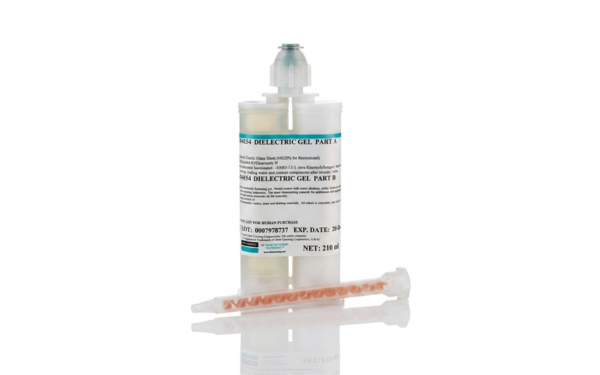
Main features
- Electrically Insulating Material
- 550 mPa s Mixed Viscosity
- 180-Minute 80 deg C Cure
Product Description
DOWSIL™ 3-4154 Dielectric Gel Kit is a two-part, clear, addition-cure silicone gel supplied at a 1:1 mix ratio for potting and protecting PCB system assemblies. Its low mixed viscosity supports flow around delicate components and higher-profile architectures, while the cured soft gel provides cushioning, electrical insulation, and isolation from moisture and other contaminants. The material can cure at room temperature or with heat, with published heat-cure schedules of 180 minutes at 80°C and 105 minutes at 100°C. Its clear appearance also makes it relevant where visibility of encapsulated components is desired. Final process conditions and assembly performance should be confirmed through application-specific testing.
Key features
- Clear 1:1 addition-cure system: Combines a transparent appearance with equal-part mixing for manual or meter-mix processing.
- Low mixed viscosity: A typical mixed viscosity of 550 mPa·s supports dispensing and flow around intricate PCB components and assemblies.
- Soft dielectric protection: A typical gel hardness of 110 g and dielectric strength of 18 kV/mm support cushioning and electrical insulation around sensitive circuitry.
Applications / Suitable for
- Potting and protecting PCB system assemblies
- Encapsulating delicate electronic components and interconnections
- Optoelectronic encapsulation applications requiring a clear, compliant gel
Related resources
Technical Specifications
No specifications available.
Additional Information
DOWSIL 3-4154 Dielectric Gel Kit
DOWSIL 3-4154 is a clear, two-part addition-cure silicone gel for potting and protecting PCB system assemblies. Its 1:1 mix combines a typical mixed viscosity of 550 mPa s with a 30 minute working time, followed by published heat-cure schedules at 80 deg C or 100 deg C. The cured gel is designed for soft dielectric protection around delicate electronic components.
Typical as-supplied properties
Values are typical and are not intended for use in preparing specifications. Component and mixed states are kept separate.
| Property | Value | Unit | Method / condition |
|---|---|---|---|
| Viscosity, Part A or Base | 550 | mPa s | Typical as-supplied value |
| Viscosity, Part B or Catalyst | 525 | mPa s | Typical as-supplied value |
| Viscosity, mixed | 550 | mPa s | Typical mixed-material value |
| Specific gravity, uncured | 0.97 | - | Typical uncured value |
Mixing, dispensing and cure
DOWSIL 3-4154 begins curing after Parts A and B are combined. Accurate proportioning, complete mixing, control of entrained air, and appropriate heat-cure conditions are important processing considerations for the gel.
Shelf life is 12 months at 25 deg C. Follow the use-by date and storage instructions on the product label, and keep the two components controlled before mixing.
Typical cured-gel properties
These values describe the cured gel. Gel hardness and penetration are typical product properties; electrical values are product selection data and should be confirmed against current qualification requirements.
| Property | Value | Unit | Method / condition |
|---|---|---|---|
| Gel hardness | 110 | g | Typical cured-gel value |
| Penetration | 50 | 1/10 mm | Typical cured-gel value |
| Dielectric strength | 18 | kV/mm | Product selection data; test method not stated |
| Volume resistivity | 1.05E+15 | ohm cm | Product selection data; test method not stated |
Electronics protection applications
DOWSIL 3-4154 is used as a soft dielectric gel for protecting PCB system assemblies and is also included in Dow lighting materials guidance for gel-based protection of electronic assemblies.
Product resources
Evaluate DOWSIL 3-4154 for your electronics protection process
Krayden can help review PCB geometry, mixing and dispensing approach, working time, heat-cure window, potential cure-inhibition risks, dielectric requirements, and whether the gel format fits your assembly. Discuss product selection, samples, processing considerations, technical data, or qualification planning for your electronics encapsulation application.